
Choosing the right Enclosed Auto Trailer in 2026 requires more than comparing prices and exterior finishes. Global buyers must match trailer design with vehicle dimensions, cargo weight, towing capacity, climate, and service access. A compact steel model may suit local delivery routes, while an aluminum trailer can reduce corrosion risks near coastal areas. Composite panels may offer insulation benefits, but repairs can be less familiar in smaller markets.
Details matter.
This guide examines enclosed car haulers, race car trailers, cargo-style auto trailers, and customized transport units. It considers frame construction, axle ratings, braking systems, ramp angles, interior clearance, ventilation, tie-down points, lighting, and loading safety. Experienced users know that a low ramp threshold can prevent bumper damage, while poor weight distribution can affect stability during long-distance travel. Manufacturer documentation, independent inspections, and verified after-sales support should guide every purchase. Certification and equipment requirements differ between countries, so buyers must confirm local transport rules before ordering.
No single trailer type fits every buyer. A heavy-duty model may provide confidence but increase fuel consumption and maintenance costs. A lighter trailer may be efficient, yet its payload could disappoint after adding tools, spare tires, and protective equipment. This comparison aims to provide practical, evidence-based guidance while acknowledging uncertainty in specifications and regional supply chains. Some recommendations may need revision as manufacturers update designs, materials, and safety features. Careful measurement remains essential.
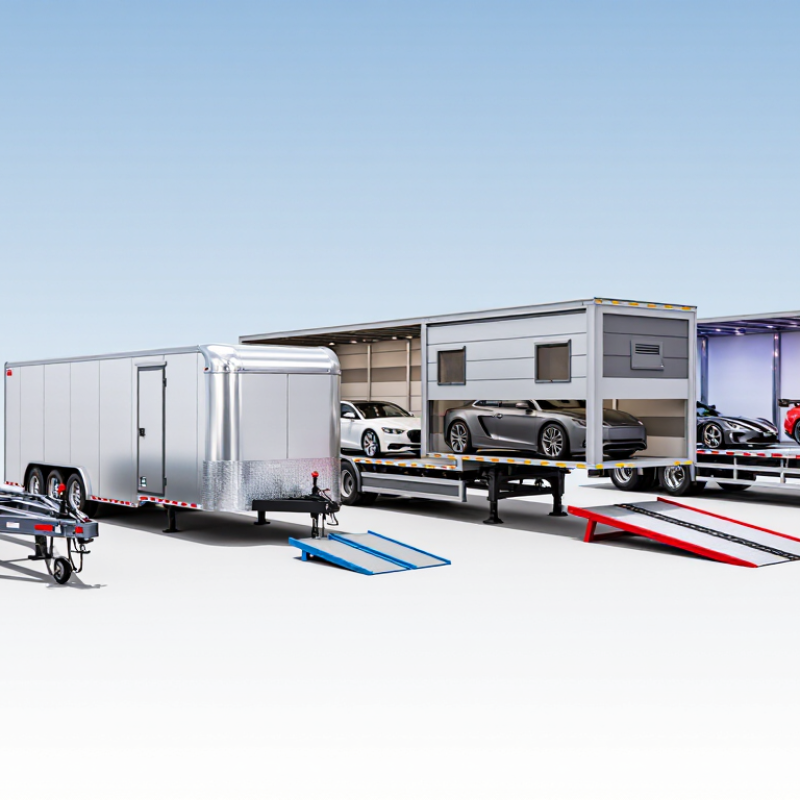
What Is an Enclosed Auto Trailer and Who Needs One?
An enclosed auto trailer is a covered transport unit designed to move vehicles inside a protected space. Unlike open trailers, it shields the vehicle from rain, dust, road debris, and casual exposure. Its shell also offers privacy and reduces the risk of exterior damage during long-distance transport. Inside, the vehicle should rest on strong ramps, balanced axles, and properly rated tie-down points.
The right trailer depends on the vehicle and the work involved. Private collectors often choose one for classic cars, motorcycles, or expensive daily drivers. Restoration shops need extra interior length for tools and parts. Racing teams may require wide doors, low loading angles, and secure equipment storage. Dealers and relocation companies can also benefit from enclosed protection during regional or international delivery. Families moving one valuable vehicle may need one, too. It is not only for professionals.
Before choosing, measure the vehicle’s length, width, height, and ground clearance. Check payload capacity, axle ratings, braking equipment, ventilation, and ramp angle. Local transport rules may also affect lighting, dimensions, registration, and towing requirements. A shiny exterior can mislead. I have seen buyers focus on appearance while overlooking weak floor anchors and poor weight distribution. That mistake can make loading stressful and towing unstable. Ask for clear specifications, inspection records, and maintenance details. Then compare the trailer with your real loading habits, not an imagined perfect trip.
Enclosed auto trailers are classified by design and capacity. Design starts here.
Low-profile wedge trailers reduce wind resistance and suit one compact vehicle. Box-style trailers provide greater interior height, useful for SUVs, tools, or spare wheels.
Open-frame interiors are easier to inspect, while insulated walls protect vehicles from dust and temperature changes.
Axle layout also changes the trailer’s working character. Single-axle models are lighter and easier to maneuver in narrow yards. Tandem-axle models usually offer better stability under heavier loads. Some high-capacity designs use multiple axles, stronger frames, and reinforced floors.
A rear ramp, side door, and adjustable tie-down points can matter more than exterior appearance.
Capacity should never be judged by floor size alone. Buyers need to compare payload, gross vehicle weight rating, axle ratings, and tongue weight.
Measure the vehicle’s length, width, height, wheelbase, and loading clearance first.
A trailer may fit on paper but fail at the ramp angle. That mistake is common.
I would also leave practical reserve capacity, rather than loading close to the maximum every trip.
Regional equipment rules and towing requirements differ, so specifications should be verified with qualified local professionals before purchase.
A careful inspection should include welds, brakes, lighting, tires, fasteners, and corrosion around the floor edges.
Choosing an enclosed auto trailer starts with the vehicle, not the exterior appearance. A compact single-axle trailer suits motorcycles, small equipment, and light cargo. It is easier to maneuver in narrow streets. However, limited interior width can make loading awkward.
A tandem-axle car hauler offers better stability for sedans, crossovers, and small vans. Check the vehicle’s length, height, wheelbase, and track width before ordering. Leave clearance around mirrors and doors. A low ramp angle helps prevent bumper scraping. Strong floor tie-down points are essential. Do not rely on the trailer wall for restraint. The combined trailer and cargo weight must remain within the tow vehicle’s rated capacity.
For heavier vehicles, a larger enclosed hauler with a reinforced floor may be more suitable. It can handle pickups, utility vehicles, or frequent commercial transport jobs. Consider rear-door width, ramp strength, ventilation, interior lighting, and spare-tire access. In humid or coastal regions, sealed wiring and corrosion-resistant hardware deserve extra attention. In field inspections, buyers often focus on payload but overlook axle balance. That mistake can cause uneven tire wear and unstable towing. I have also seen “universal” layouts fail when a tall vehicle meets a low roof. Measure twice. Transport needs change, too. A trailer selected for one compact car may become unsuitable after a vehicle upgrade. Check local weight, lighting, and road-use requirements before purchase.
For 2026, enclosed auto trailers should match the vehicle, route, and towing capacity. Single-axle models suit lighter cars and shorter trips. Tandem-axle trailers offer better stability and load distribution. Hydraulic-tilt designs can reduce loading angles on low-clearance vehicles. Fully enclosed models provide weather protection, but increase weight and aerodynamic drag. A practical mistake is choosing interior length before checking axle ratings.
Safety begins with measurable limits. The World Health Organization’s Global Status Report on Road Safety 2023 estimates 1.19 million annual road deaths worldwide. That figure reinforces careful coupling, braking, lighting, and visibility checks. Use rated safety chains, breakaway systems, tires, and wheel bearings. Secure the vehicle at four approved points. Check tongue weight with actual cargo loaded. NHTSA’s Traffic Safety Facts reports 42,514 United States road deaths in 2022, showing why small towing errors deserve attention.
Legal requirements change across borders and sometimes between regions. Buyers should verify maximum gross trailer mass, towing limits, brake requirements, dimensions, lighting, mirrors, registration, insurance, and inspection rules. UNECE vehicle regulations provide useful technical references, but local authorities still control approval. A coupler accepted in one country may fail another country’s certification rules. Left-hand and right-hand traffic also affect mirror visibility and lighting placement. I would recheck every document before shipping; international assumptions are often the weakest part of a purchase.
Global buyers should compare enclosed auto trailers by use, not appearance. A compact bumper-pull model suits one vehicle and easier parking. A tandem-axle trailer offers better stability for heavier cars. Gooseneck designs provide more payload, but require a suitable towing vehicle and greater turning space. Measure the vehicle, ramps, spare tires, and workshop tools before choosing interior length.
Price comparisons should include more than the supplier’s quotation. Add freight, port handling, import duties, insurance, registration, and replacement parts. A low-cost trailer may become expensive after a long shipment. Check axle ratings, brake systems, tire specifications, frame welds, roof sealing, and floor thickness. Ask for inspection records, load testing, clear technical drawings, and written warranty terms. Small details matter. A leaking rear door can damage an interior within one rainy season.
Supplier evaluation needs practical evidence. Request photos from multiple production stages, not only polished showroom images. Confirm production lead time, spare-part availability, packaging quality, and after-sales communication. I would also ask whether the supplier can adapt lighting, plugs, couplers, and documentation for the destination market. Requirements differ between regions, so buyers should verify local transport rules independently. My comparison method is not perfect; online photos can hide poor weld penetration or weak hinges. A video inspection helps, but an independent pre-shipment inspection is safer. Reliability often appears in ordinary details, such as accurate measurements and honest answers about defects.
How should buyers compare trailer costs, features, and suppliers in 2026?
How to read this chart: The price bands are indicative 2026 planning ranges in USD for new enclosed trailers commonly sold in international markets. Final prices vary by country, size, steel or aluminum construction, axle rating, interior equipment, freight, taxes, and certification requirements.
Buyer guidance: General cargo trailers are usually the lowest-cost option, while enclosed car haulers provide more length and payload capacity. Motorcycle and ATV trailers prioritize compact loading space. Toy haulers and race transporters cost more because they typically include reinforced floors, ramps, storage systems, electrical packages, and additional interior features.
Supplier comparison checklist: Compare usable interior dimensions, payload rating, axle and braking specifications, corrosion protection, warranty coverage, spare-parts availability, export documentation, delivery lead time, and the total landed cost rather than the quoted trailer price alone.
It is a covered transport unit that carries vehicles inside a protected space. It blocks rain, dust, road debris, and casual exposure. The vehicle remains hidden during travel.
Collectors use them for classic cars, motorcycles, and valuable daily vehicles. Restoration shops gain room for tools and spare parts. Racing teams may need wide doors and low loading angles. Families moving one valuable vehicle may need one, too.
Measure its length, width, height, wheelbase, and ground clearance. Include mirrors, roof items, spare tires, and loading equipment. A paper fit can still fail at the ramp.
Low-profile designs reduce wind resistance and suit compact vehicles. Box-style trailers provide more height for SUVs and equipment. Single-axle models maneuver easily in narrow yards. Tandem axles usually provide greater stability.
Check payload, gross vehicle weight rating, axle ratings, and tongue weight. Do not judge capacity by floor size alone. Leave practical reserve capacity for safer towing. Maximum loading feels tempting. It is not always wise.
Inspect ramps, tie-down points, brakes, lights, tires, welds, and floor fasteners. Check roof sealing and corrosion around floor edges. A leaking rear door can damage the interior during one rainy season.
Include freight, port handling, duties, insurance, registration, and replacement parts. A low quotation may become expensive after a long shipment. Also check maintenance needs and spare-part availability.
Request technical drawings, inspection records, load testing, and written warranty terms. Ask for production photos from several stages. Consider an independent inspection before shipment. Online photos can hide weak hinges or poor welds.
An Enclosed Auto Trailer is a secure, weather-resistant solution for transporting cars, motorcycles, recreational vehicles, and specialty equipment. This guide explains how enclosed trailers are classified by size, axle layout, interior height, loading design, and weight capacity. It also compares common configurations, including compact trailers for smaller vehicles, larger models for full-size cars, and high-capacity options for professional transport or multi-purpose use. By matching trailer dimensions, payload limits, ramp design, and interior features to the vehicle and transport task, buyers can improve safety and operating efficiency.
For global buyers in 2026, selecting the right trailer requires careful attention to towing capacity, braking systems, tires, lighting, load securing, ventilation, and visibility. Buyers should also confirm that the trailer meets the registration, road-use, import, and equipment requirements of the destination market. A practical comparison should include purchase price, maintenance, shipping, customization, warranty support, spare parts availability, and supplier reliability. The best choice balances total ownership cost, durability, safety, and suitability for long-term use.

Shodailer