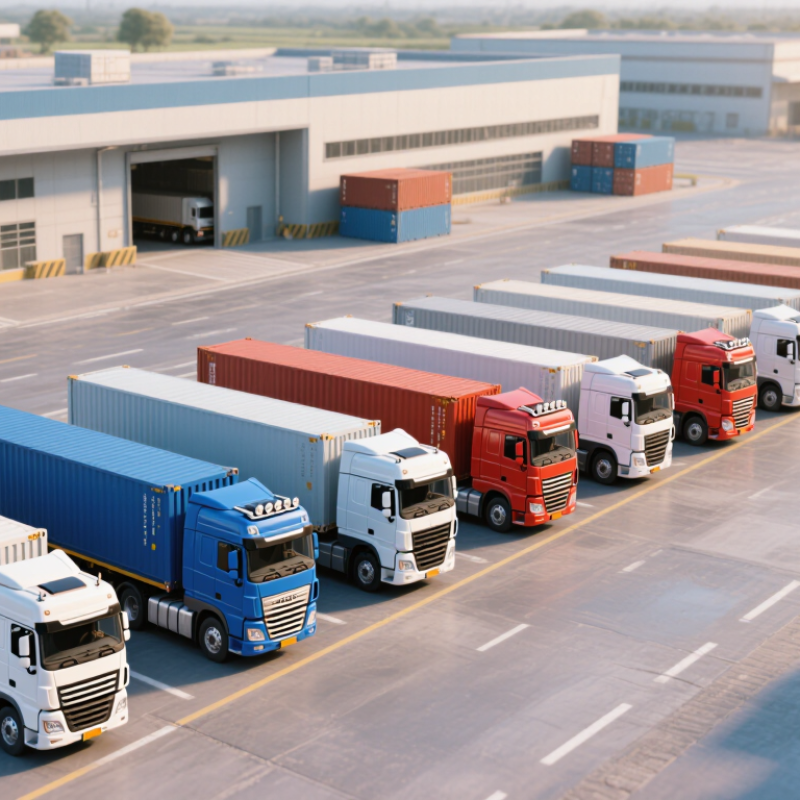
Top 10 Container Trailer Manufacturers in China

Time:2026-11-08 Author:Sophia
0%

Choosing a Container Trailer manufacturer in China involves more than comparing prices or product photos. Buyers need to consider payload requirements, route conditions, tractor compatibility, and local service support. A trailer that looks suitable in a catalogue may need different axle spacing, braking equipment, or deck dimensions for a specific operation. Small details matter. They affect maintenance, loading time, and daily reliability.

This guide introduces ten manufacturers and offers a practical starting point for evaluating them. It considers product range, manufacturing capability, customization options, quality documentation, and after-sales support. These factors can help buyers prepare focused questions before requesting quotations. Ask for current specifications, production timelines, warranty terms, and references for comparable models. Where possible, review inspection records or arrange a factory visit. A polished website alone is not enough. No ranking can fit every fleet, and available information may change. Treat the list as a shortlist, then verify each supplier’s claims against your own requirements. That extra check takes time, but it can prevent costly mismatches after delivery.
Top 10 Container Trailer Manufacturers in China

China’s Container Trailer Industry and Its Main Product Types

China’s container-trailer industry serves a large, varied freight market. The Ministry of Transport’s 2023 Statistical Bulletin recorded 310.34 million TEUs of port container throughput. That figure signals substantial container movement, but it is not a measure of trailer sales. Trailer demand also depends on road routes, fleet replacement, and port access.

The main product is the skeletal chassis, designed to carry standard 20-, 40-, or 45-foot containers. Operators often choose 20-foot configurations for heavier loads and 40-foot units for common long-haul work. A key distinction. Flatbed trailers can carry containers and other cargo, while extendable chassis accommodate different container lengths. Sidewall and curtain-sided trailers offer more protection for general freight, but they are not substitutes for every container-hauling task.

The China Association of Automobile Manufacturers reported 4.031 million commercial-vehicle sales in 2023. This broader category includes vehicles beyond trailers, so it should not be read as a trailer-market total. Fit matters. Buyers should compare axle ratings, chassis weight, suspension, braking systems, and corrosion protection against actual routes and cargo. On coastal roads, salt exposure can make coating quality especially important. Yet specifications alone do not tell the whole story; maintenance access and parts availability deserve closer attention than they often receive.

Common Container Lengths Served by Container Chassis

Container trailers are designed to carry standardized container sizes. This chart compares three commonly used container lengths; it does not represent manufacturer output or market share.

Criteria for Selecting Leading Chinese Manufacturers

Choosing among China’s container trailer manufacturers requires more than comparing catalog prices. Check whether a factory can show consistent welding quality, documented load tests, and clear inspection records. Ask for frame-joint photos and coating-thickness readings from recent production, not just polished showroom images. Useful evidence. Confirm that axle, braking, suspension, and lighting specifications suit your routes, container types, and local operating requirements. A capable engineering team should explain these choices clearly and provide drawings before production begins. Vague answers are a warning, though not proof of poor workmanship.

Production capacity matters, but consistency matters more. Review delivery records across multiple orders, spare-part availability, and how defects are handled after shipment. Request references for comparable trailer configurations and speak with past buyers when possible. Check whether inspections are recorded from steel preparation through final testing. A factory visit can reveal practical details: organized weld stations, labeled components, and calibrated measuring tools. Yet one tidy visit cannot guarantee every unit will match. I would compare warranty terms, export packing, and communication speed, then keep a written specification sheet. Small omissions matter. Confirm tire ratings, spare-wheel arrangements, and corrosion protection before approval. Selection is not perfectly objective; scoring systems can hide trade-offs between cost, lead time, and service support. Use them as a guide, not a verdict.

Profiles of 10 Container Trailer Manufacturers in China

China’s container-trailer industry includes manufacturers with different production strengths. These ten profiles reflect useful areas to compare, rather than a verified ranking. Some suppliers focus on standard chassis for common container sizes. Others build custom configurations for specific cargo weights, routes, or tractor units. A factory visit can reveal practical details: weld consistency, frame alignment, and how finished trailers are inspected. Small details matter.

Other profiles highlight lightweight frames, heavy-duty designs, modular production, and integrated axle assembly. Some manufacturers emphasize surface preparation and protective coatings, while others invest in automated welding or engineering support. Export-focused suppliers may assist with shipping documents and product specifications. Service teams also matter; a responsive contact can save time when a component needs clarification. These capabilities vary, even among factories selling similar products.

A useful profile should explain more than production capacity. Ask how load ratings are tested, which materials are specified, and whether inspection records are available. Check the warranty terms and availability of replacement parts. Brochures rarely show the whole picture. Public information may also be uneven, so confirm claims directly and compare written quotations carefully. A lower price can be attractive, but it does not reveal long-term maintenance costs.

Top 10 Container Trailer Manufacturers in China - Profiles of 10 Container Trailer Manufacturers in China

The profiles below are anonymized, representative product configurations, not verified profiles of ten specific manufacturers. Container compatibility and features describe common product options; confirm dimensions, payload ratings, and specifications directly with a supplier.

Profile Representative product focus Container compatibility Typical chassis features Common application Specification to confirm
Profile 01 20-foot container chassis 20-foot containers Fixed-length frame with container twistlocks Short-distance container transfer and port operations Axle configuration, rated payload, and lock positions
Profile 02 40-foot container chassis 40-foot containers Long fixed frame with twistlock fittings Road transport of standard-length containers Overall dimensions, axle loads, and container-lock layout
Profile 03 Multi-position container chassis Selected 20-foot and 40-foot container arrangements Multiple twistlock positions on one frame Operators needing flexibility across container lengths Approved lock combinations and permitted loading configurations
Profile 04 Extendable container chassis Container lengths supported by the selected extension design Sliding or telescoping frame sections with locking points Transport tasks requiring adjustment of chassis length Extension range, locking method, and allowable load at each setting
Profile 05 Gooseneck container chassis Container types and lengths specified for the chassis design Recessed frame section designed to provide additional container clearance Container transport where deck height or clearance is a consideration Container fit, ground clearance, and tractor fifth-wheel compatibility
Profile 06 Three-axle container chassis Container compatibility depends on frame length and lock layout Three-axle running gear; suspension and brake options vary General container haulage, subject to local weight regulations Axle ratings, braking equipment, and jurisdictional road limits
Profile 07 Lightweight container chassis Container compatibility depends on the selected model Weight-conscious frame design; material and construction vary Operations where reducing empty vehicle weight is a priority Verified tare weight, payload rating, and structural documentation
Profile 08 Heavy-duty container chassis Container compatibility depends on chassis length and design rating Reinforced components may be specified for demanding duty cycles Heavy container-haulage work within applicable legal limits Design load, axle and suspension ratings, and road-use compliance
Profile 09 Intermodal container chassis Containers supported by the specified twistlock arrangement Chassis and locking layout configured for container handling and transfer Road legs connecting terminals, depots, and distribution sites Container interface dimensions and compatibility with handling procedures
Profile 10 Custom-specification container chassis Defined by the buyer's container and operating requirements Frame, axle group, suspension, and fittings selected to order Specialized fleets or markets with specific operating requirements Drawings, type approval, test records, and destination-market requirements

Comparing Manufacturers by Products and Capabilities

China’s container-trailer manufacturers are best compared by the products they build and the evidence behind their capabilities. Skeletal chassis, flatbeds, and extendable trailers suit different container sizes, routes, and loading conditions. Check axle layouts, tare weight, twist-lock positions, corrosion protection, and tractor compatibility. Small details matter.

UNCTAD’s Review of Maritime Transport 2024 reports that global maritime trade grew 2.4% in 2023, while containerized trade grew only 0.3%. This uneven demand makes flexible production useful, but it does not prove that every factory can deliver reliable custom builds. Compare documented lead times, engineering support, component sourcing, and parts availability. Still, a catalog is not proof.

The World Bank’s Logistics Performance Index 2023 assesses infrastructure, logistics competence, tracking, and timeliness. These factors can guide questions about delivery coordination and after-sales support. For manufacturing quality, request weld inspection records, load-test procedures, and coating specifications; then check whether the documents match the trailer offered. Public product pages rarely show how consistently a factory controls production. That gap deserves attention. A factory visit or independent inspection can reveal practical details, such as finish quality around welds and the fit of locking points.

Key Factors for Choosing a Container Trailer Supplier

Choosing a container trailer supplier starts with matching the trailer to real routes, payloads, and loading conditions. Ask for axle ratings, tare weight, kingpin specifications, and compatibility with your tractor. Then check how the frame, suspension, and locking points are protected against corrosion and repeated loading. Small details matter.

UNCTAD’s Review of Maritime Transport 2024 reports that maritime trade grew 2.4% in 2023 and projects 2.6% growth for 2024. More cargo can mean tighter equipment schedules, so confirm production lead times, delivery inspection procedures, and access to replacement parts. The World Bank’s 2023 Logistics Performance Index evaluates factors including infrastructure, logistics service quality, and timeliness. Use it as context for your operating environment, not as a rating of individual trailer makers.

Request load-test records, warranty terms, and service-response times in writing. Inspect weld finish, brake-line routing, lighting, and locking mechanisms on a sample unit. A low quote may hide costly downtime. I would question any supplier that cannot explain its test method or warranty exclusions clearly; paperwork alone is not proof of durability.

FAQS

Which trailer type should I compare?

Match skeletal chassis, flatbed, or extendable designs to container sizes, routes, and loading conditions. No single design fits every job.

What specifications should I check?

Review axle ratings, tare weight, kingpin details, twist-lock positions, and tractor compatibility. Small details matter.

How can I assess manufacturing quality?

Request weld inspection records, load-test procedures, and coating specifications. Check whether the documents match the exact trailer offered.

Does industry growth prove a supplier can deliver?

No. Maritime trade grew 2.4% in 2023, while containerized trade grew only 0.3%. Growth figures do not verify factory performance.

What should I ask about delivery and parts?

Confirm documented lead times, delivery inspections, component sourcing, and replacement-parts availability. A catalog is not proof.

What should I inspect on a sample trailer?

Look closely at weld finishes, brake-line routing, lighting, locking points, and corrosion protection. Get practical, not just polished.

How should I compare quotes and warranties?

Read warranty terms, exclusions, and service-response times in writing. A low quote may conceal costly downtime.

Can logistics ratings identify the best manufacturer?

No. Logistics ratings describe broader operating conditions, not an individual factory’s quality. I would still ask for direct evidence. Papers alone can fall short.

Conclusion

China has become an important source of container trailers, offering a range of designs for transporting standard and specialized containers. This overview explains the main product types and the practical criteria used to assess manufacturers, including production capacity, engineering experience, quality control, customization options, and after-sales support. It also profiles ten Chinese manufacturers without focusing on brand promotion, highlighting the kinds of products and capabilities buyers may encounter.

A side-by-side comparison can help readers understand how suppliers differ in product range, manufacturing strengths, and service provisions. When choosing a Container Trailer supplier, buyers should consider the intended operating conditions, trailer configuration, material and component specifications, delivery requirements, communication, and long-term maintenance support. Careful evaluation of these factors can make it easier to identify a supplier whose products and capabilities fit a project’s needs.

Sophia

Sophia

Sophia is a dedicated marketing professional with an exceptional depth of knowledge about her company's products and services. With a keen understanding of market trends and customer needs, she crafts insightful blog posts that not only inform but also engage readers, enriching the company’s online......