
How to Choose the Best Small Cargo Trailer?

Time:2026-10-25 Author:Aria
0%

Choosing among Small Cargo Trailers is not simply a matter of comparing prices. A trailer must match your vehicle, cargo, roads, storage space, and towing experience. A compact box may look efficient beside a garage, yet its loaded tongue weight can change steering and braking. That detail matters.

The U.S. Bureau of Transportation Statistics consistently identifies trucking as a central freight mode in America’s transportation system. This reinforces a practical point: small trailers support everyday logistics, from tools and landscaping equipment to motorcycles and household deliveries. However, the right choice depends on verified specifications, not attractive photographs. The National Highway Traffic Safety Administration’s TireWise guidance also emphasizes correct tire pressure, load limits, and regular inspections. These basics deserve attention.

This guide explains how to compare GVWR, payload capacity, axle ratings, brake systems, interior dimensions, and hitch compatibility. It also considers aluminum versus steel construction, ramp-door convenience, tie-down locations, weather sealing, and corrosion protection. A useful trailer should load easily on a rainy morning and remain stable on a rough highway. That sounds obvious. It is often overlooked.

Industry specifications can be confusing, and manufacturer labels are not always presented consistently. Payload estimates may also feel optimistic when shelving, spare tires, and accessories are included. Therefore, careful buyers should verify every number with the manufacturer and vehicle owner’s manual. The best Small Cargo Trailers are not necessarily the largest or cheapest models. They are the ones that provide safe capacity, dependable handling, practical access, and sensible long-term value.
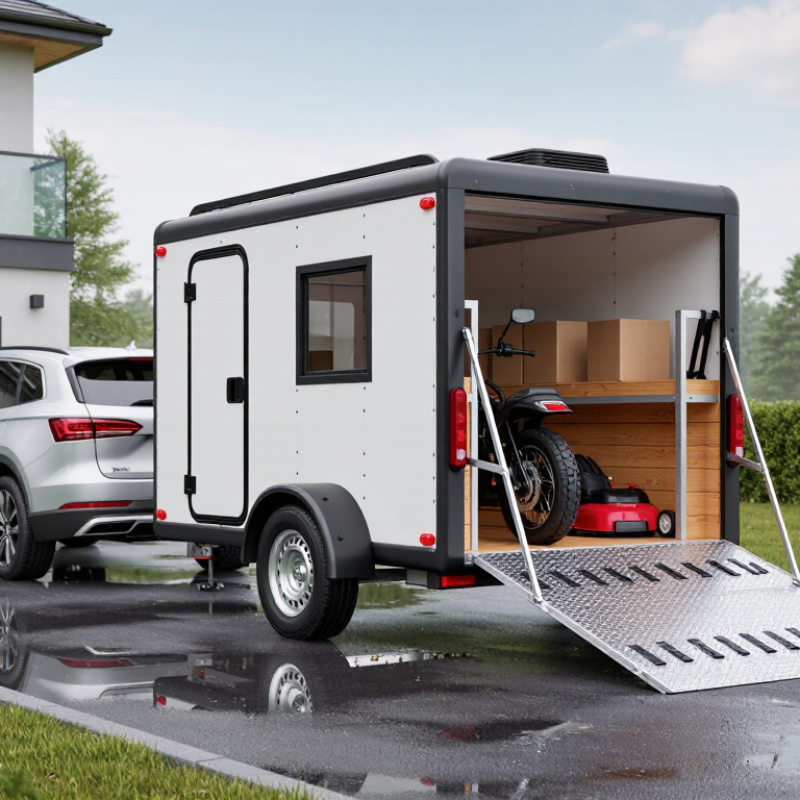
How to Choose the Best Small Cargo Trailer?

Define Your Cargo Needs and Towing Requirements

Choosing a small cargo trailer starts with the cargo, not the trailer catalog. List each item, its weight, dimensions, and loading frequency. A motorcycle, landscaping tools, and boxed furniture create very different demands. Measure the longest item first. Then allow space for straps, padding, and uneven stacking.

Your real limit is the lowest rated component. Check the tow vehicle’s manual for maximum trailer weight, payload, hitch rating, and frontal-area limits. Payload includes passengers, luggage, and trailer tongue weight. NHTSA towing guidance recommends tongue weight near 10–15% of the loaded trailer weight. A 2,000-pound trailer therefore needs about 200–300 pounds at the hitch. SAE J2807 also emphasizes controlled testing for tow-rating performance. Ratings are not casual suggestions. My first estimate was optimistic; real cargo becomes heavy quickly.

Tips: Weigh the loaded trailer at a certified scale. Keep heavy items low and slightly forward of the axle. Secure every item against braking and cornering forces. Verify tire pressure when cold. Leave a safety margin instead of towing at the absolute limit. A small trailer can still handle poorly when loaded unevenly. That detail is easy to miss.

Compare Trailer Sizes, Payload Limits, and Interior Layouts

Choosing the best small cargo trailer starts with matching size to your real cargo, not imagined future needs. A 4 x 6-foot trailer suits compact tools, boxes, and garden equipment. A 5 x 8-foot model offers better room for bulky household items. Measure twice. Check the interior length, width, height, and rear-door opening before buying. A trailer may look spacious outside but feel restrictive inside.

Payload limits deserve equal attention. Payload means cargo weight, not the trailer’s empty weight. Add shelving, tie-downs, spare equipment, and every loaded item. Compare that total with the certified payload plate and towing vehicle limits. Leave breathing room. Carrying near the maximum can reduce braking confidence and make the trailer unstable. I once estimated a loaded tool chest by appearance and missed its true weight. That mistake changed my planning. A public scale or accurate platform scale provides better evidence.

Interior layout affects daily use more than many buyers expect. A flat floor works well for bins and wheeled equipment. Wall-mounted tie-down points prevent shifting during turns. Interior height matters when loading tall cabinets or upright machines. For mixed cargo, keep heavy items low and close to the axle, while lighter items remain forward or rearward only when properly balanced. A larger 6 x 10-foot trailer may offer useful space, but its extra weight can reduce towing flexibility. Review the owner’s manual, inspect the frame and door seals, and ask a qualified trailer technician to check unfamiliar components.

Evaluate Trailer Materials, Construction, and Weather Protection

Choosing a small cargo trailer starts with its materials, but construction decides how long they perform. Aluminum reduces weight and resists surface corrosion, while galvanized steel often provides greater frame stiffness. Neither option is maintenance-free. Inspect welds, fasteners, floor joints, and roof seams closely. A thin skin can look attractive yet flex around poorly supported doors.

Weather protection deserves equal attention. NOAA’s 2023 Billion-Dollar Weather and Climate Disasters report recorded 28 costly U.S. events, showing why rain, wind, and hail should influence trailer selection. Look for a one-piece roof, overlapping door seals, sealed marker lights, and a raised floor edge. Open the rear door after rainfall. Water hiding beneath the threshold is a warning sign.

Salt exposure needs more than paint. Use coated or galvanized hardware, and check whether aluminum panels touch bare steel. That contact can accelerate galvanic corrosion, especially near wet road spray. ASTM B117 salt-spray testing can compare coatings, but it does not predict real service life perfectly. This is where specifications can mislead. Ask how seams are sealed, not merely how thick the panels are. A practical inspection should include the roof after heavy rain, the underside after winter driving, and the interior corners with a flashlight. Small gaps become expensive repairs.

Check Towing Compatibility, Safety Features, and Legal Requirements

Choosing the best small cargo trailer starts with towing compatibility, not appearance. Check your vehicle’s rated towing capacity, payload limit, hitch rating, and maximum tongue weight. The loaded trailer should remain comfortably below those limits. Aim for balanced loading, with roughly 10–15% of total trailer weight on the hitch. Heavy items belong low and near the axle.

Measure carefully.

Before buying, inspect the coupler, safety chains, tires, wheel bearings, reflectors, and lighting connector. Confirm that the trailer has working brake lights, turn signals, and a reliable parking system. Some heavier trailers require separate brakes and a breakaway device. I once underestimated how quickly a poorly balanced trailer could sway on a wet road. That mistake changed how I load every trailer now. A short test drive can reveal movement that a parked inspection cannot.

Legal requirements vary by location, so check the transport authority where the trailer will be registered and used. You may need registration, a plate, proof of ownership, insurance, or an inspection certificate. Width, height, lighting, braking, and safety-chain rules may also apply. Ask about speed limits and towing restrictions before traveling across regional borders. Keep the documents in the vehicle, not inside the trailer. A seller’s advice is useful, but local regulations remain the more reliable source. When uncertain, verify the exact loaded weight at a certified scale.

How to Choose the Best Small Cargo Trailer? — Check Towing Compatibility, Safety Features, and Legal Requirements

Typical specifications are general planning ranges. Always confirm the trailer manufacturer's rating plate and the towing laws in the jurisdiction where the trailer will be operated.
Trailer or Requirement Category Typical Data or Benchmark Towing Compatibility Check Safety and Legal Considerations Best Use
Compact utility cargo trailer Approx. 4 × 6 ft to 5 × 8 ft cargo area; empty weight commonly 500–1,200 lb; GVWR commonly 1,500–3,500 lb. The vehicle's rated towing capacity should exceed the trailer's actual loaded weight. Check the hitch class, receiver rating, and maximum tongue weight. Use safety chains crossed under the coupler, working tail lights, reflectors, tires with adequate load capacity, and a properly latched coupler. Lawn equipment, moving boxes, bicycles, tools, and light recreational cargo.
Enclosed small cargo trailer Approx. 4 × 6 ft to 6 × 12 ft cargo area; interior height often 4–7 ft; empty weight commonly 900–2,500 lb; GVWR commonly 2,000–7,000 lb. Include the trailer's empty weight, cargo, accessories, spare tire, and water or fuel containers when estimating gross weight. A higher center of gravity and larger side area can increase sway and wind sensitivity. Use a load-distribution plan and keep heavy items low and centered. Weather-protected transport, household moves, trade equipment, and secure storage.
Single-axle trailer Usually lighter, narrower, and easier to maneuver; common for small trailers up to approximately 3,500–5,000 lb GVWR. Confirm the axle rating, wheel and tire load ratings, and the vehicle's maximum allowable trailer weight. A single-axle design may be more sensitive to uneven loading. Inspect wheel bearings, tire condition, and suspension regularly. Lower-cost ownership, short trips, and moderate loads.
Tandem-axle trailer Generally provides greater load capacity and stability; often used when GVWR exceeds approximately 3,500–5,000 lb. Verify that the tow vehicle can handle the loaded trailer, tongue weight, and additional braking demand. Usually requires more maintenance components, including additional tires, bearings, and suspension parts. Brake requirements may apply at lower weights depending on location. Frequent hauling, heavier equipment, and longer-distance towing.
Gross Vehicle Weight Rating (GVWR) The maximum permitted total weight of the trailer, including cargo, fluids, accessories, and tongue load. Never use the tow vehicle's maximum tow rating alone. Compare the loaded trailer weight with the vehicle's tow rating, payload rating, axle ratings, and combined weight rating. Do not exceed the lowest-rated component, such as the axle, tires, coupler, hitch, or vehicle rating. A primary limit for selecting a safe trailer and planning cargo.
Payload capacity Payload is approximately GVWR minus the trailer's empty or curb weight. Example: a 3,500 lb GVWR trailer weighing 1,200 lb empty has about 2,300 lb of theoretical payload. Use actual scale weights when possible. Cargo should be distributed so that the trailer remains within axle and tongue-weight limits. A theoretical payload calculation does not override tire, axle, coupler, or tow-vehicle limits. Choosing the correct size without paying for unused capacity.
Tongue weight A commonly used planning target is approximately 10–15% of the loaded trailer weight for conventional bumper-pull trailers. Check the vehicle, hitch, ball mount, and coupler tongue-weight ratings. Measure the actual tongue weight if the load is near any limit. Too little tongue weight can cause sway; too much can overload the rear axle and reduce steering control. Stable loading and predictable handling.
Hitch and coupler fit Common ball sizes include 1-7/8 in, 2 in, and 2-5/16 in, but the correct size and rating must match the coupler specification. Match the ball diameter, shank size, ball mount rating, receiver size, and coupler capacity. Do not rely on appearance alone. The coupler must fully engage and lock. Attach safety chains to appropriate connection points and install a breakaway system when legally required. Preventing uncoupling and ensuring the towing connection is correctly rated.
Trailer brakes Electric or hydraulic brakes may be fitted. Brake requirements commonly depend on trailer weight and local law. Confirm that the tow vehicle has the required brake controller, wiring, and connector for the trailer's braking system. Test braking performance before travel. A breakaway device may be required for braked trailers and must be maintained in working order. Heavier trailers, steep terrain, frequent towing, and improved stopping control.
Lighting and visibility Most road-going trailers require tail lamps, stop lamps, turn signals, rear reflectors, and a visible license plate or registration marking where applicable. Check the wiring connector, ground connection, lamp placement, and compatibility with the tow vehicle's electrical system. Replace damaged lenses and clean reflectors. Some jurisdictions require side marker lamps, clearance lamps, or additional conspicuity markings based on trailer width or length. Safe operation at night, in rain, and in heavy traffic.
Tires and wheels Trailer tires should have a combined load capacity suitable for the axle rating and loaded trailer weight. Correct cold inflation pressure is shown on the tire or information label. Check tire load range, speed rating, size, wheel bolt pattern, age, tread, and inflation pressure before each trip. Replace tires with cracks, bulges, exposed cords, or significant age-related deterioration. Do not mix incompatible tire sizes or ratings. Reducing blowout risk and maintaining load stability.
Load securing and weight distribution Heavy cargo should be placed low, centered over or slightly forward of the axle, and secured against movement. Confirm that tie-down points, straps, cargo bars, and partitions are rated for the cargo. Keep the center of gravity within the trailer's design limits. Loose or shifting cargo can change tongue weight, damage the trailer, or fall onto the road. Use weather-resistant covers for exposed loads. Stable handling and protection of cargo.
Registration, title, and license plate Requirements vary by country, state, province, or territory and may depend on trailer weight, construction, and intended use. Confirm ownership documents, vehicle identification number, registration deadline, title requirements, and plate display rules before purchase or travel. Keep registration documents available when required. A homemade or modified trailer may require inspection or additional documentation. Lawful operation on public roads.
Width, length, and height limits Maximum dimensions differ by jurisdiction and may include the tow vehicle, trailer, load, mirrors, and overhang. Measure the complete combination, including roof vents, ladders, mirrors, and cargo. Check route restrictions for bridges, tunnels, and narrow roads. Oversize loads may require warning flags, lights, permits, or travel-time restrictions. Never allow cargo to obscure required lamps or the license plate. Avoiding fines, clearance collisions, and route problems.
Insurance and roadside equipment Coverage requirements vary. Useful equipment includes a properly rated spare tire, jack, wheel chocks, reflective warning devices, and basic tools. Ask the insurer whether the trailer and its cargo are covered while attached, parked, or being loaded. Carry emergency equipment appropriate to local law and road conditions. Inspect the spare tire and jack before departure. Reducing downtime and financial risk after a breakdown or incident.

Assess Pricing, Maintenance Needs, and Long-Term Value

Price is only the entry point when choosing a small cargo trailer. Compare the purchase cost with tires, lighting, brakes, registration, and routine servicing. A cheaper trailer may use thinner panels or less durable flooring. That difference can become expensive after several seasons.

Inspect the frame for even welds, surface corrosion, and signs of poor repairs. Check door seals carefully. Water under the floor can damage cargo and weaken the structure. Look underneath. Ask for a clear maintenance schedule, warranty conditions, and parts availability. A responsible seller should explain service intervals without pressure. That matters.

Estimate ownership costs over five years, not just the first month. Include tire replacement, wheel-bearing service, repainting, and possible suspension repairs. Keep receipts. They support warranty claims and can improve resale confidence. A useful trailer should match your real load size, because excessive capacity often means unnecessary weight and fuel use. I once underestimated door clearance, and loading became frustrating every week. That small mistake affected the trailer’s practical value more than expected.

Long-term value also depends on storage. Covered parking can reduce seal damage and corrosion. However, projections are never perfect. Resale prices change with local demand, condition, and repair history. Choose a simple design with accessible components, even if it costs slightly more. Complex features may look attractive, but they can increase maintenance time and future repair bills.

How to Choose the Best Small Cargo Trailer?

Comparing typical five-year ownership economics helps balance purchase price, maintenance needs, and long-term value. The figures below are planning estimates for commonly available small enclosed cargo trailer sizes in the United States.

Key takeaway: Smaller trailers generally cost less to buy and maintain, while larger models may offer more usable capacity and stronger resale value. Compare total ownership cost with your actual hauling requirements before choosing.

FAQS

How should I determine the right cargo trailer size?

Start with your actual cargo list. Measure the longest item, then add room for straps, padding, and uneven stacking. A 4 x 6-foot trailer suits compact tools and boxes. A 5 x 8-foot trailer handles bulkier household items. Measure twice.

What towing limits should I check before buying?

Check the tow vehicle’s manual for maximum trailer weight, payload, hitch rating, and frontal-area limits. Include passengers, luggage, and tongue weight. The lowest rated component controls your safe limit. Leave margin.

How much tongue weight does a loaded trailer need?

Aim for tongue weight near 10–15% of the loaded trailer weight. A 2,000-pound trailer may need about 200–300 pounds at the hitch. Measure it instead of guessing. My early estimate was too optimistic.

How can I calculate the trailer’s real payload?

Payload means cargo weight, not the trailer’s empty weight. Add tools, shelving, spare equipment, tie-downs, and every loaded item. Compare the total with the payload plate. A public scale gives better evidence than appearance.

How should cargo be arranged inside the trailer?

Keep heavy items low and slightly forward of the axle. Place lighter items where balance remains controlled. Secure every item against braking and cornering forces. Uneven loading can make a small trailer handle badly.

What interior details affect everyday trailer use?

Check interior length, width, height, and rear-door opening. A flat floor helps with bins and wheeled equipment. Wall tie-down points reduce shifting. Door clearance matters more than expected. Mine could have been better.

What should I inspect before purchasing a used or new trailer?

Inspect frame welds, surface corrosion, flooring, tires, lights, brakes, and door seals. Look underneath for damage or poor repairs. Water beneath the floor can harm cargo and weaken the structure. Ask about service intervals and parts access.

What ownership costs should I plan for?

Include tires, lighting, registration, wheel-bearing service, repainting, and possible suspension repairs. Estimate costs over five years, not one month. Covered storage can reduce corrosion and seal damage. Projections remain imperfect. Keep receipts.

Conclusion

Choosing the best Small Cargo Trailers starts with clearly defining what you plan to transport, how often you will use the trailer, and the towing capacity of your vehicle. Consider the trailer’s size, payload limit, axle design, and interior layout to ensure it can handle your cargo without becoming difficult to maneuver. A practical layout should provide enough usable space while keeping weight distributed safely.

You should also evaluate construction materials, frame strength, flooring, doors, ventilation, and weather protection for dependable performance in different conditions. Confirm that the trailer matches your vehicle’s hitch, electrical system, braking capacity, and overall towing limits, while also reviewing essential safety equipment and local registration requirements. Finally, compare the purchase price with expected maintenance, durability, fuel use, and resale potential. The best choice is not always the cheapest option, but the trailer that offers reliable protection, safe handling, manageable upkeep, and long-term value for your specific cargo needs.

Aria

Aria

Aria is a dedicated marketing professional with a deep passion for innovative strategies and a keen understanding of our company's product offerings. With a wealth of experience in the industry, Aria excels at crafting engaging content that highlights the unique features and benefits of our......