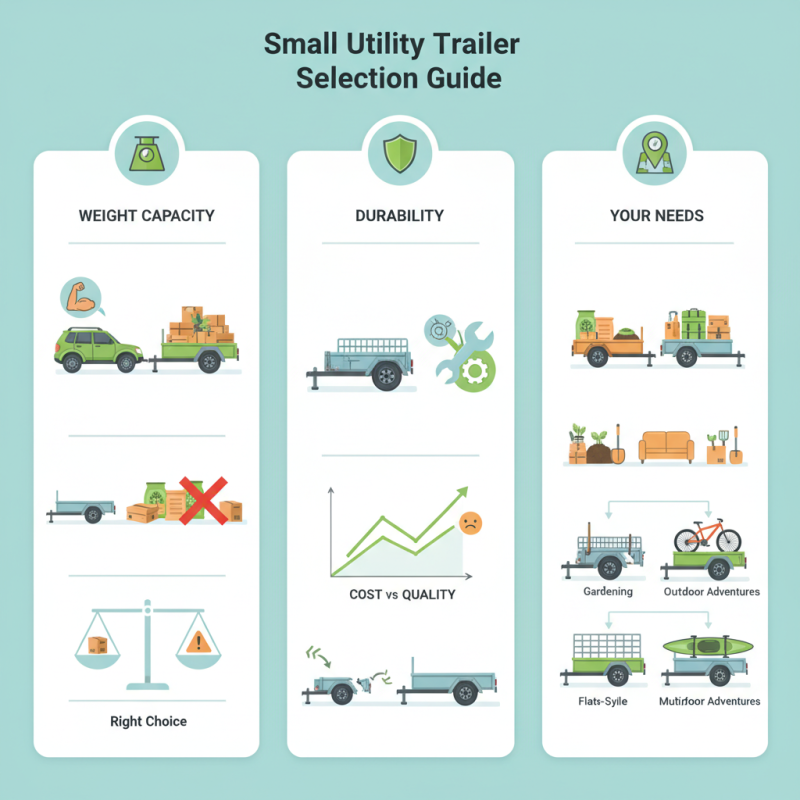
When choosing a Small Utility Trailer, it’s essential to consider your specific needs. These trailers come in various sizes and designs, aimed at different tasks. Whether you need a trailer for gardening supplies, furniture transport, or outdoor adventures, the right choice can make all the difference.
One key factor is the weight capacity. A trailer that is too small can strain under heavy loads, leading to breakdowns. On the other hand, an oversized trailer may be challenging to maneuver. Assessing your typical load will aid you in selecting an effective option.
Durability is another critical aspect. A well-constructed Small Utility Trailer ensures safety and longevity. However, it’s worth noting that some cheaper models may appear appealing initially. Many users encounter issues down the line, needing repairs or replacements. Locating a balance between cost and quality can be challenging, yet it’s essential for a dependable purchase.
Understanding Your Specific Hauling Needs
When selecting a small utility trailer, understanding your specific hauling needs is crucial. Consider the type of items you will transport. Are they heavy construction materials, landscaping tools, or weekend camping gear? Weighing your common cargo can guide you to the right trailer capacity.
Tip: Think about weight limits. A trailer that is too weak will damage easily and can cause accidents. When in doubt, go for a higher weight capacity to ensure safety.
It’s also vital to reflect on the dimensions of the cargo. Will the items fit comfortably in the trailer? Measure your largest loads and compare them with the trailer’s dimensions. Many users overlook this detail and end up with a trailer that doesn’t suit their needs.
Tip: Visualize loading your cargo. Imagine the arrangement and how easily you can secure your items. If the configuration feels off, you might need a different size or style.
Finally, contemplate the features you desire. Do you need sidewalls, ramps, or specific tie-down points? Assessing these features can greatly improve your hauling experience. Some find themselves regretting a lack of certain features after making a purchase. Think carefully before deciding.
Evaluating Size and Weight Capacity Requirements
When selecting a small utility trailer, size and weight capacity are crucial factors. The right dimensions contribute to effective transport, while appropriate weight limits ensure safe hauling. According to industry standards, small trailers often range from 4x6 to 6x12 feet. A common choice is a 5x8-foot trailer, suitable for everyday tasks like lawn maintenance or furniture movement.
Weight capacity varies significantly. Many small utility trailers can handle loads from 1,200 to 3,500 pounds. Knowing your requirements is essential. For instance, a homeowner moving tools may only need a 1,500-pound capacity. However, a contractor hauling materials requires something more robust. Careless weight choices can lead to accidents, strain the towing vehicle, or even damage the trailer itself.
Consider the trailer's intended use. Are you transporting bulky items or multiple smaller ones? Evaluate how often you’ll use it. If usage is infrequent, a compact trailer may suffice. Frequent users should invest in larger, more durable models. Review data from utility trailer guides to grasp the necessary features. Ignoring these factors can lead to costly mistakes and diminish the trailer’s lifespan.
Exploring Trailer Materials and Construction Quality
When selecting a small utility trailer, the materials and construction quality are critical. Different trailers are made from various materials like steel, aluminum, and wood. Steel is known for its strength, but it can rust over time. Aluminum is lighter and resistant to corrosion, making it an appealing choice. However, it may not have the same load capacity as steel. Understanding these characteristics helps narrow down choices.
Construction quality plays a significant role in durability and performance. Look for trailers with welded frames instead of bolted ones. Welded joints provide enhanced strength and longevity. Inspecting the welds can reveal quality—smooth, even welds indicate better craftsmanship. Additionally, pay attention to the axle and wheel design, which affects stability and load distribution. A sturdy axle minimizes wobbling during transport.
Evaluate how trailers are designed for your specific needs. Some trailers have additional features like reinforced beds or removable side panels. These can enhance functionality, but may add weight. It’s essential to balance durability and usability. Non-standard features are sometimes a gamble; they could prove useful or unnecessary. Reflect on your requirements and choose wisely.
Identifying Necessary Features and Accessories
When selecting a small utility trailer, certain features and accessories are key. Consider the trailer’s weight capacity. It should match your hauling needs. A trailer with a capacity of around 1,500 to 3,500 pounds can handle many tasks, but this depends on your intended use. Be sure to factor in the load you plan to transport.
Next, assess the trailer’s construction. A solid frame is crucial for durability. Look for trailers made of reinforced steel or aluminum, as these materials can withstand regular use. Tire quality is another important feature. Opt for heavy-duty tires that can handle varying terrains.
Think about additional accessories that enhance usability. A trailer with removable side rails offers flexibility. Loading and unloading become easier with these features. Consider adding a spare tire and a hitch lock for safety. A few thoughtful upgrades can make a significant difference in usability and peace of mind. Don't overlook the importance of proper maintenance as well; a well-maintained trailer will perform better and last longer.
Comparing Costs and Budget Options for Small Trailers
When considering a small utility trailer, understanding costs is crucial. A market analysis from the National Trailer Dealers Association indicates that small trailers range in price from $1,000 to $5,000, based on size and features. Budget-conscious buyers should prioritize essential specifications. For instance, a basic single-axle trailer is often more affordable, while tandem-axle versions typically cost more.
You might find it beneficial to evaluate your needs against potential expenses. A heavy-duty trailer may seem like a worthwhile investment for durability. However, over-specifying can lead to unnecessary costs. A report by the American Trailer Manufacturers Association highlights that nearly 30% of trailer buyers regret their choices due to overspending or incorrect sizing. This realization can save significant amounts in the long run.
Additionally, calculate maintenance expenses. Many users overlook this aspect, which can dramatically affect overall budget. Maintenance costs can vary, often adding up to 10-15% of the initial purchase each year. Assessing your usage frequency and load requirements will help guide your decision. Remember, a carefully considered purchase today can prevent regret tomorrow.
Small Utility Trailer Cost Comparison
This chart illustrates the average costs associated with different types of small utility trailers. Understanding these price ranges can help you make an informed decision based on your budget and requirements.
FAQS
: Think about the type of items you will transport. Weight and dimensions matter.
Weigh your common cargo. Compare it against the trailer's weight limits for safety.
Measuring ensures your cargo fits well. Many users overlook this and end up disappointed.
Consider sidewalls, ramps, and tie-down points. Lacking features can lead to regrets after purchase.
Prices range from $1,000 to $5,000, depending on size and features.
Evaluate your needs carefully. Overspending or incorrect sizing is common and regrettable.
Maintenance can add 10-15% of the purchase price each year. Don’t overlook this expense.
Assess how often you'll use the trailer. It can guide your choice effectively.
A heavy-duty trailer seems smart but can be unnecessary. Balance needs and costs.
You might regret your decision later. Careful consideration today can prevent future issues.
Conclusion
When selecting the best Small Utility Trailer for your needs, it's essential to start by understanding your specific hauling requirements. Consider what items you intend to transport and their dimensions, as this will guide you in evaluating the size and weight capacity needed for your trailer. Different tasks may also necessitate various materials and levels of construction quality, which can significantly impact durability and performance.
Additionally, don't overlook the importance of necessary features and accessories that could enhance your trailer's functionality, such as ramps, tie-down points, or special hitches. Finally, comparing costs and budget options will ensure that you find a Small Utility Trailer that not only meets your needs but also fits within your financial plans. Taking the time to analyze these factors will lead you to a well-informed decision.
 Shodailer