
How to Choose the Right Utility Trailer for Your Needs?

Time:2026-05-01 Author:Liam
0%

Selecting the right utility trailer can be daunting. With so many options, what should you prioritize? Renowned industry expert John Smith states, “The right utility trailer can simplify your life and enhance productivity.” This speaks to the essence of choosing a trailer that meets specific needs.

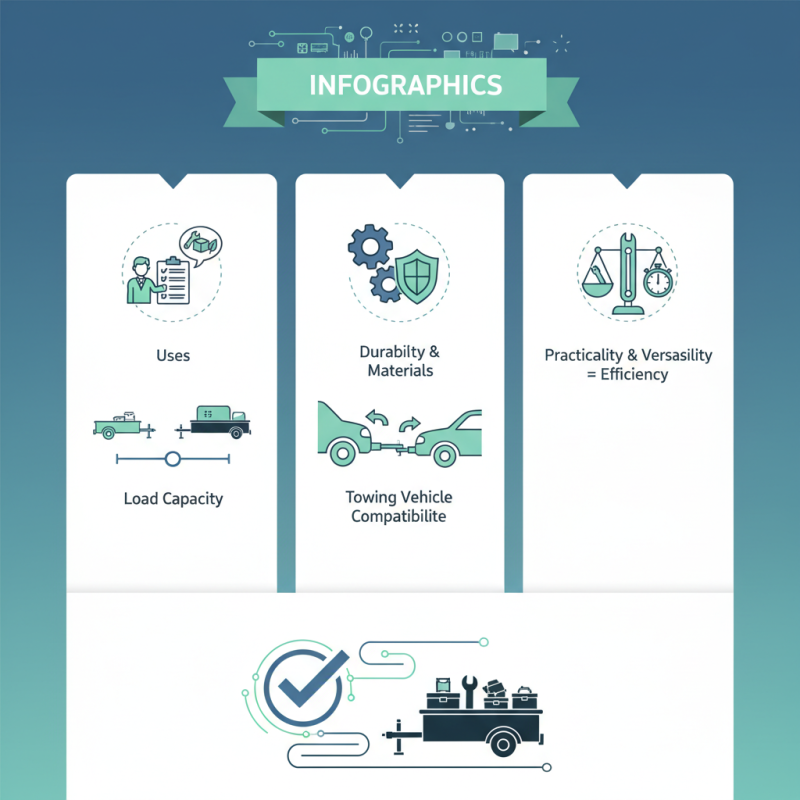
When considering a utility trailer, analyze your requirements. Do you need it for hauling equipment, moving furniture, or landscaping? Each task demands different features. For instance, a lightweight trailer suffices for small jobs. Yet, heavier loads necessitate a sturdier design. Think about the materials and durability as well.

Don't forget to evaluate your towing vehicle as well. Ensure compatibility in size and weight. Many overlook this crucial aspect. Ignoring it can lead to unpleasant surprises on the road. By assessing these factors, the perfect utility trailer will emerge. Achieving a balance between practicality and versatility ensures satisfaction and efficiency for your tasks.
How to Choose the Right Utility Trailer for Your Needs?

Understanding the Different Types of Utility Trailers and Their Features

When selecting a utility trailer, understanding the different types is essential. Utility trailers typically fall into categories such as open, enclosed, and specialty. Open trailers are versatile, allowing for easy loading and unloading. However, they offer limited protection from the elements. On the other hand, enclosed trailers provide security and weather resistance, which is great for transporting fragile items. Yet, they can be heavier and more expensive.

Consider your specific needs before making a decision. If you frequently haul bulky equipment, an open trailer may suit you well. For transporting tools or sensitive materials, opt for an enclosed model. Specialty trailers cater to niche markets, like car haulers or landscaper trailers. Each type has distinct features like ramp gates, sidewalls, and tie-down points that can significantly affect usability.

Don’t overlook weight capacity and towing compatibility. Depending on your vehicle's specifications, some trailers may not be suitable. It’s vital to assess these factors, as mismatches can lead to safety issues. Reflect on how you plan to use your trailer. This will guide you in choosing the right option that aligns with both your needs and budget.

Evaluating Your Needs: Weight Capacity, Size, and Load Type Considerations

Choosing the right utility trailer begins with understanding specific needs. Weight capacity is crucial. Most utility trailers offer capacities ranging from 1,500 to 7,000 pounds. Knowing what you plan to haul helps determine the right weight rating. According to the National Association of Trailer Manufacturers, improper loading can cause accidents or damage to cargo.

Size also plays a vital role. Lighter loads may need smaller trailers, but larger loads require more substantial options. A common size range is 4x6 to 8x20 feet. Assess the dimensions of your typical cargo. It’s essential to consider maneuverability. A larger trailer may not fit in all spaces, which complicates unloading.

Load type matters too. Different materials need different support. For example, hauling a vehicle demands a heavier-duty model, whereas gardening supplies may not. According to industry data, utility trailers often cater to specific load types. Reflecting on your past hauling experiences can reveal preferences and challenges. Each of these factors influences your final decision on the right trailer.

Key Features: Braking Systems, Materials, and Suspension Types Explained

When selecting the right utility trailer, consider key features like braking systems, materials, and suspension types. Understanding these factors can enhance safety and performance. The National Highway Traffic Safety Administration (NHTSA) reports that trailers with advanced braking systems reduce stopping distances significantly. This is crucial when hauling heavy loads, especially on incline roads.

Material choice is another essential aspect. Steel trailers are robust but heavier, offering durability. Aluminum, while lighter and resistant to rust, may not have the same load capacity. According to industry data, approximately 60% of trailer users prefer steel for its strength. However, lighter materials can improve fuel efficiency for towing vehicles. Reflecting on the balance between weight and durability is important.

Suspension types vary greatly. A leaf spring suspension is standard for utility trailers, but it can lack flexibility. In contrast, a torsion axle system provides better shock absorption. This results in a smoother ride and less wear on the trailer frame. Understand that your needs will dictate the best system. Engaging with community forums or expert reviews can help narrow down choices, though personal experiences often reveal both merits and limitations of each type.

Utility Trailer Features Comparison

This chart illustrates the popularity ratings of different key features of utility trailers, highlighting the significance of braking systems, materials, and suspension types.

Cost vs. Value: Analyzing Trailer Prices and Long-term Investment Factors

When considering a utility trailer, understanding cost versus value is crucial. Prices can vary significantly based on materials, capacity, and features. Some trailers are cheaper upfront but may require more repairs or replacements. This can lead to higher long-term costs. Investing in a durable trailer can save money down the road. Researching the expected lifespan and maintenance needs is essential.

Analyzing the features you need also plays a role in value. For example, if you frequently transport heavy loads, focus on trailers with reinforced frames. Safety features like brakes are also essential. Cheap trailers might lack these vital elements, leading to potential risks. Sometimes, spending a bit more is worth it for added safety and durability.

One must reflect on personal usage habits. Consider how often you’ll use the trailer and for what purpose. A trailer that seems affordable may not fit all needs. Choosing the right balance between initial cost and long-term value requires careful thought. Prices can be tempting, but asking the right questions will lead to a better investment.

How to Choose the Right Utility Trailer for Your Needs? - Cost vs. Value

Trailer Type Average Cost ($) Load Capacity (lbs) Typical Use Long-term Value Rating (1-5)
Open Utility Trailer 1,000 - 3,000 1,500 Landscaping, Hauling Equipment 4
Enclosed Trailer 2,500 - 7,000 3,000 Moving, Storage 5
Dump Trailer 3,500 - 8,000 6,000 Construction, Landscaping 5
Car Hauler Trailer 1,500 - 5,000 3,500 Auto Transport 4
Bike Trailer 500 - 1,500 500 Recreational 3

Safety Standards: Ensuring Compliance with Regulations and Best Practices

When selecting a utility trailer, safety should be your top priority. Compliance with safety standards is essential not only for legal reasons but also for the protection of yourself and others. Make sure the trailer meets local regulations. Check the weight limits and tire specifications. These details impact your trailer's performance and safety.

Tips: Always inspect your trailer before use. Look for wear and tear in the wiring and brakes. Regular maintenance helps to prevent accidents.

Consider lighting options for visibility. Proper lights ensure that others can see you on the road. This is critical, especially at night or in poor weather conditions. Check that all lights are working before each trip.

Sometimes, you may overlook simple things. Ensure your load is balanced. An uneven load can lead to swaying, which can cause accidents. Take the time to secure your cargo properly. This small step can make a big difference in safety.

FAQS

: What factors should I consider when choosing a utility trailer?

: Start with weight capacity, size, and load type. Knowing what you will haul is essential.

What is the typical weight capacity for utility trailers?

Capacities range from 1,500 to 7,000 pounds. Match this with your hauling needs.

Why is size important in selecting a trailer?

Size affects maneuverability. Larger trailers may complicate unloading and fitting into tight spaces.

How does load type influence trailer choice?

Different loads require different support. Vehicles need heavier models while lighter materials do not.

What key features should I look for in a trailer?

Consider braking systems, materials, and suspension types for safety and performance.

How do braking systems impact trailer safety?

Advanced braking systems lessen stopping distances, especially important for heavy loads on inclines.

Should I choose steel or aluminum for my trailer?

Steel offers strength but is heavier. Aluminum is lighter but may not support as much weight.

What are the advantages of different suspension types?

Leaf spring is standard, but torsion axles provide better shock absorption, resulting in a smoother ride.

How can I learn more about trailers?

Engage in community forums or read expert reviews. Personal experiences can reveal both pros and cons.

What reflections should I consider from past hauling experiences?

Assess your preferences, challenges, and what worked or didn’t before making a decision.

Conclusion

Choosing the right utility trailer requires a careful assessment of various factors to ensure it meets your specific needs. Start by understanding the different types of utility trailers available, including their features such as weight capacity, size, and load type, which are crucial for your intended use. Evaluating these aspects will help you determine what trailer suits your requirements best.

Additionally, key features like braking systems, materials, and suspension types should be taken into account, as they significantly impact the trailer's performance and durability. It's also important to analyze the cost versus value, considering trailer prices in relation to their long-term investment benefits. Finally, ensuring compliance with safety standards and regulations is essential for safe operation. By carefully considering these factors, you can select a utility trailer that aligns perfectly with your needs.

Liam

Liam

Liam is a dedicated marketing professional with a profound expertise in the industry, where he excels at highlighting the unique advantages of our core products. With a keen understanding of market trends and consumer needs, Liam frequently updates our company’s professional blog, providing......