China Top Small Cargo Trailer Manufacturers?

Time:2026-11-01 Author:Mason
0%

Choosing a reliable Small Cargo Trailer manufacturer in China takes more than comparing prices or polished product photos. Buyers should examine frame construction, axle capacity, braking options, weather protection, and the quality of welds. A close look matters. So does a clear conversation with the supplier.

This guide explores how to assess leading Chinese manufacturers and match their capabilities to real transport needs. Useful questions include whether the company builds trailers in-house, how it checks materials, and what inspection records it can share. Ask for measurements, load specifications, and detailed photos of the underside, coupler, and suspension. These details can reveal more than a broad promise of “heavy duty.” Still, photos cannot replace a physical inspection, and supplier claims deserve verification.

Consider production experience, customization limits, communication, lead times, and after-sales support alongside the quoted cost. Confirm that specifications are documented and that any testing evidence relates to the model being considered. Requirements vary by destination and intended use, so buyers should independently check applicable local standards before ordering. Not every factory is the right fit. Some may offer attractive designs but limited support; others may communicate well yet lack the required production capacity. The comparison is rarely perfect. Use consistent questions, request clear answers, and treat unanswered details as a reason to pause. This practical approach can help narrow the field without assuming that the largest catalog or lowest price guarantees the best result.
China Top Small Cargo Trailer Manufacturers?

What Defines a Small Cargo Trailer?

What Defines a Small Cargo Trailer?

“Small” is not a universal engineering category. In practical use, it usually describes a compact enclosed trailer whose box can carry household, trade, or recreational loads while remaining manageable behind a suitable vehicle. Buyers should compare interior length, width, and height, then check empty weight and gross vehicle weight rating. A trailer may look small outside but lose useful space to thick walls, wheel wells, and a low roof. Measure the actual items you plan to carry. A folded workbench can tell you more than a product label.

Weight matters as much as dimensions. The American Automobile Association’s 2019 towing test reported fuel economy dropping by up to 35 percent when a vehicle towed a travel trailer. That result is not a direct test of every cargo trailer, but it shows why added load and aerodynamic drag deserve attention. Check the tow vehicle’s ratings, hitch capacity, and loaded trailer weight before choosing a size. Small does not automatically mean easy to tow. A narrow trailer can still feel unstable when its load is poorly balanced. This is where casual estimates fail; weigh the finished load when possible.

China’s Small Cargo Trailer Manufacturing Industry

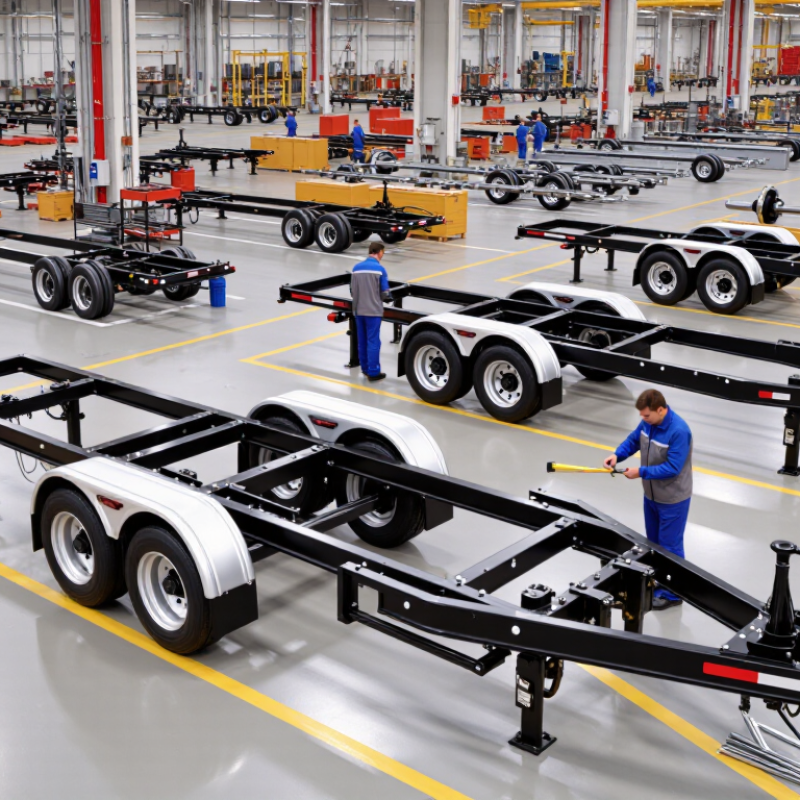
China’s small cargo trailer manufacturing industry is built around practical metalworking: cut steel sections, welded frames, bolted axles, and weather-resistant floors. The product may look simple. Its reliability depends on details such as consistent welds, balanced loading, and protected wiring. China’s Association of Automobile Manufacturers reported 30.16 million vehicles produced in 2023. That figure signals a vast vehicle supply ecosystem, but it does not measure trailer output or demand directly.

Trade data also needs careful reading. UN Comtrade groups trailers and related vehicles under HS 8716, a category broader than small cargo trailers. Export totals for that code therefore cannot be treated as a precise count of compact utility models. This distinction matters. Buyers comparing factories should ask for load-test records, material specifications, corrosion-protection details, and inspection procedures—not just a headline production figure.

Manufacturing capability varies between workshops, even within the same industrial region. A neat frame in a showroom tells only part of the story. Check the underside, hinge alignment, lighting connections, and spare-parts availability. Public data remains imperfect for this niche; I would not infer quality from export volume alone. Short lead times are useful, but consistency matters more.

Common Trailer Types and Their Key Features

Open utility trailers are common for landscaping tools, lumber, and bulky supplies. Their low sides make loading easy, while removable rails can improve access. A mesh ramp helps with wheeled equipment, but check its rating before loading. Good for visible, quick access.

Enclosed cargo trailers add walls and a roof to protect goods from rain, road spray, and dust. Interior tie-down rails help secure boxes or furniture during travel. A single rear door keeps the design simple; side doors can make frequent stops easier. Extra protection also means more weight and wind resistance. Not always worth it.

Small dump trailers suit gravel, soil, and other loose materials. A hydraulic lift tips the bed for unloading, though payload limits and balance still matter. For compact loads, a lightweight flatbed can offer flexible access from several sides. Check the floor, axle capacity, tires, and hitch match before choosing. On paper, sizing seems simple. In practice, a trailer that is too heavy can reduce useful payload, while one that is too small may require extra trips.

How to Evaluate Small Cargo Trailer Manufacturers in China

Evaluating small cargo trailer manufacturers in China requires more than comparing online prices. Start with factory evidence. Request recent workshop videos, production photos, and a live video inspection. Check the steel frame, weld consistency, axle mounting, flooring, lighting, and corrosion protection. A clean showroom proves little.

Ask for drawings, material specifications, load ratings, inspection records, and applicable test reports. Reliable manufacturers explain how each trailer is tested before shipment. Their answers should remain consistent across sales, engineering, and quality teams. Confirm whether the quoted payload includes accessories, spare wheels, and packaging. Small details matter.

Sample inspection is essential. Measure the bed dimensions, coupling height, tire clearance, and door alignment. Open and close every latch. Look underneath the trailer, where weak welds may hide. Request a written quality agreement with tolerances, replacement procedures, and delivery terms. Communication speed is useful, but technical accuracy matters more. Cheap offers can become expensive after modifications, delays, or missing documents. I would not rely on certificates alone; verify issuing bodies and test scope. The evaluation may feel incomplete, and that is normal. Keep questioning. Manufacturers that accept reasonable scrutiny usually provide clearer production control and more dependable long-term cooperation.

Applications, Customization, and Export Considerations

Small cargo trailers serve farms, contractors, market vendors, and local delivery teams. Their jobs differ: a farm may need a low loading height, while a tradesperson needs lockable tool storage. Match the frame, axle rating, floor, and tie-down points to the real load—not just its advertised weight. A payload plan helps. Still, buyers sometimes underestimate wet equipment, spare tires, and added accessories.

Customization for export should cover dimensions, coupler type, lighting, brakes, corrosion protection, and packing method. Ask the factory for drawings, material specifications, inspection records, and photos of the finished unit. These details help buyers compare quotations and spot mismatches before shipment. UNCTAD’s Review of Maritime Transport 2024 reports that seaborne trade grew 2.4% in 2023. Shipping conditions can still shift, so confirm container fit, loading plans, and delivery schedules with the supplier and freight forwarder. A lower initial price may not mean lower landed cost.

Tips: Send a measured load list, including its heaviest item and center of gravity. Request a prototype or sample inspection when practical. Check destination-market requirements with your importer before production, and confirm documents, labels, and spare-parts availability. Small omissions matter. A custom ramp that is too steep can make an otherwise capable trailer frustrating to use.

FAQS

When is an open utility trailer a practical choice?

It suits landscaping tools, lumber, and bulky supplies. Low sides make loading easier. Check the mesh ramp’s rating before use.

What does an enclosed cargo trailer protect against?

Its walls and roof help shield goods from rain, road spray, and dust. Tie-down rails can secure boxes or furniture. Added weight matters.

What should I consider before choosing a dump trailer?

Check payload limits, load balance, floor condition, axle capacity, tires, and hitch match. A hydraulic lift helps unload loose soil or gravel.

How should I estimate the trailer’s useful payload?

Match the frame, axle rating, floor, and tie-down points to the actual load. Include wet equipment, spare tires, and accessories. Easy to miss.

Which details should a custom export trailer include?

Confirm dimensions, coupler type, lighting, brakes, corrosion protection, and packing method. Request drawings and material specifications. Details can slip.

What should I confirm before arranging shipment?

Check container fit, loading plans, and delivery timing with the supplier and freight forwarder. A lower purchase price may not mean lower landed cost.

What information helps compare trailer quotations?

Send a measured load list with the heaviest item and its center of gravity. Ask for inspection records and finished-unit photos. I might overlook something.

Why inspect a custom ramp before ordering?

A ramp that is too steep can make loading difficult, even with a capable trailer. Check its angle and access for your equipment. Small detail.

Conclusion

A Small Cargo Trailer is a compact, towable solution for moving tools, equipment, household goods, and other everyday loads. Its size, payload capacity, construction, and towing requirements distinguish it from larger utility trailers. China’s manufacturing industry offers a range of designs, from enclosed models that protect cargo from weather to open and specialized configurations suited to different transport needs. Common features may include steel or aluminum frames, single or multiple axles, ramps, tie-down points, and optional storage or security fittings.

When evaluating manufacturers in China, buyers can compare build quality, materials, production capabilities, customization options, communication, and quality-control practices. It is also important to confirm dimensions, load specifications, towing compatibility, and the scope of any warranty or after-sales support. Applications vary from small-business deliveries and recreational use to carrying equipment on worksites. For customized or export orders, clearly document the required configuration, packaging, shipping arrangements, and destination-market requirements before production.

Mason

Mason

Mason is a seasoned marketing professional with a deep expertise in the company's offerings and a passion for driving brand awareness. With a strong background in digital marketing strategies, he has an innate ability to connect with diverse audiences and effectively communicate product benefits.......