Choosing the right Trailer Leaf Springs manufacturer affects payload stability, braking behavior, maintenance costs, and fleet uptime. Global buyers need more than a polished catalog.
Industry reports provide useful direction. OICA vehicle production data shows continuing demand for commercial transport equipment across major regions. Freedonia’s World Truck & Bus analysis also connects freight activity with replacement-part demand. These reports are not leaf-spring rankings. They are market signals.
A dependable manufacturer should prove material quality, heat-treatment control, fatigue testing, and dimensional consistency. Spring steel grades should match the intended load and operating environment. Compliance with relevant SAE, EN, or regional specifications adds confidence. Still, certificates alone are not enough.
Real experience matters.
A buyer should inspect production samples, not only brochures. Look for clean eye bushings, even camber, smooth surfaces, and consistent shot-peening marks. Ask for fatigue-test records and traceability from steel coil to finished spring. IATF 16949 certification can support process discipline, but it cannot replace technical communication.
Market data is rarely perfectly comparable. Some reports combine trailer, truck, and suspension components. That limitation deserves attention. The strongest manufacturers explain their testing boundaries instead of making broad claims.
This guide reviews leading suppliers through an international buyer’s lens. It considers manufacturing capacity, export experience, customization, quality controls, lead times, and after-sales support. Freight routes, climate, axle design, and regional road conditions also influence the best choice.
A low unit price may look attractive. A poorly matched spring can create premature wear, uneven loading, or costly downtime. The better decision balances engineering evidence, verified production capability, and long-term service reliability.
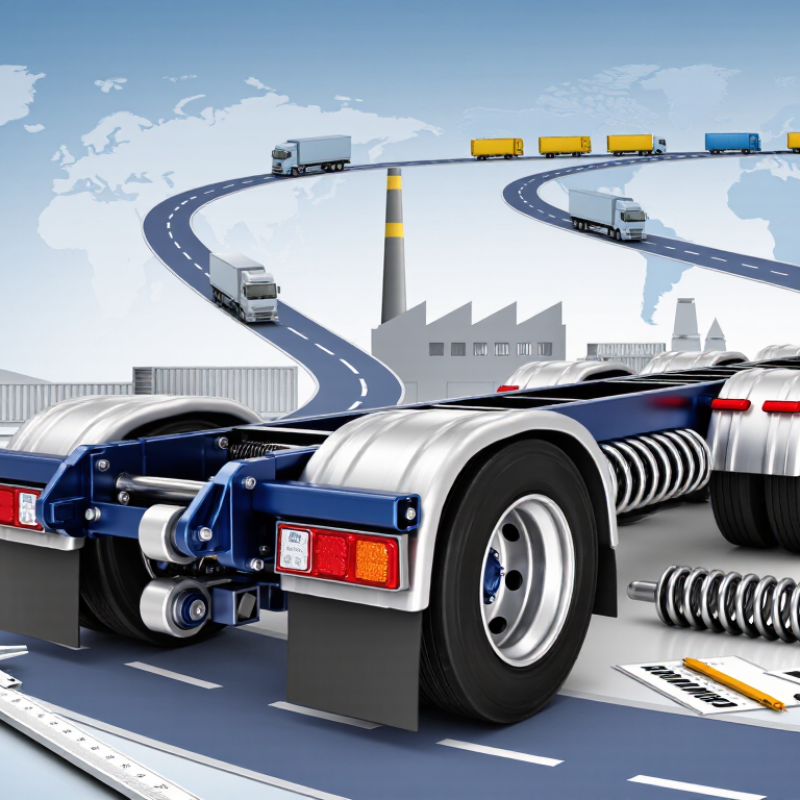
Trailer Leaf Springs: Purpose, Structure, and Operating Principles
Trailer Leaf Springs: Purpose, Structure, and Operating Principles
Trailer leaf springs support the trailer body while allowing controlled wheel movement over uneven roads. They also help distribute cargo weight across the axle and frame. Their layered structure uses several curved steel plates, called leaves, placed together for strength. The longest leaf usually includes eyes at both ends, connecting to hangers or shackles. Shorter leaves sit beneath it and share the load. This design is simple, repairable, and effective for many trailer applications.
During operation, the spring bends when the wheels meet bumps or dips. Its curved shape absorbs part of the impact, while friction between leaves can reduce sudden movement.
Load capacity depends on steel quality, leaf thickness, length, arch, and mounting geometry. A spring that is too soft may allow excessive sag. One that is too stiff can transfer harsh shocks into the frame and cargo.
Real-world conditions matter. Uneven loading, corrosion, and worn bushings can change performance, even when the spring appears acceptable.
Tips: Match replacement springs by capacity, dimensions, eye design, and mounting position. Measure the unloaded arch carefully. Inspect cracks, flattened leaves, rust, loose fasteners, and damaged shackles. Do not rely on appearance alone. A small mismatch can affect alignment and tire wear. The calculation is not always perfect, so verify actual axle loads and operating conditions before selection.
Key Criteria for Evaluating Global Leaf Spring Manufacturers
Choosing a leaf spring manufacturer requires more than comparing quoted prices. Global buyers should examine steel grades, heat-treatment records, and production consistency. Ask for measurable load, fatigue, hardness, and deflection data. Numbers reveal more than polished brochures. A reliable supplier should explain how each result was obtained. Request sample reports from recent production batches, not only laboratory examples. This detail matters.
Factory experience becomes visible in small details. Inspect forming equipment, shot-peening controls, surface-finish checks, and storage conditions. Photographs help, but an independent factory audit provides stronger evidence. Confirm whether operators follow documented procedures and inspect critical dimensions. Ask how rejected parts are isolated and recorded. That question is revealing. Manufacturers serving varied climates should discuss corrosion protection and packaging for long ocean shipments.
Communication is another practical test. A capable technical team should clarify axle loads, mounting geometry, bushing requirements, and service conditions. It should also provide drawings, material certificates, inspection plans, and traceability documents. Before placing a large order, test a controlled sample under realistic loading. Measure ride height after repeated cycles. Do not accept vague promises. Even experienced buyers can overvalue a low initial quotation. Field experience shows that small camber deviations can create fitting problems later. That risk deserves attention before production.
Leading Manufacturing Regions and Supplier Categories
Top Trailer Leaf Springs Manufacturers for Global Buyers?
Manufacturing regions matter because steel quality, heat treatment, and freight access shape final spring performance. The OICA 2023 production report recorded about 93.5 million motor vehicles worldwide. This supports strong demand across trailer and commercial vehicle supply chains. China remains a major steel and component base. World Steel Association data reported approximately 1.005 billion tonnes of crude steel production there in 2024. India, Japan, South Korea, Türkiye, and several European countries also offer established metal-forming capacity. Regional strength does not guarantee consistent quality, however. A factory may use modern presses but lack stable tempering control.
Global buyers usually meet three supplier categories: integrated spring makers, specialist suspension manufacturers, and metal-forming subcontractors. Integrated producers can control rolling, cutting, forming, heat treatment, shot peening, and testing. Specialist suppliers often provide better engineering support for axle loads, fatigue cycles, and mounting geometry. Subcontractors may offer lower prices, but traceability can be weaker. Ask for load-deflection curves, hardness records, fatigue results, material certificates, and batch identification. ISO 9001 supports documented quality processes, while IATF 16949 indicates deeper automotive quality discipline. Neither certificate replaces independent testing.
Tips:
Compare suppliers by delivered cost, not unit price. Check salt-spray exposure and storage conditions. Request samples from regular production lines. Confirm packaging prevents edge damage and moisture. Recheck specifications after design changes; small dimensional shifts can alter ride height. My imperfect rule is simple: trust evidence, then verify it again.
Quality Standards, Testing Methods, and Certification Requirements
Top Trailer Leaf Springs Manufacturers for Global Buyers?
For global buyers, leaf-spring quality starts with controlled steel, not a polished catalog. The World Steel Association reported about 1.89 billion tonnes of crude steel production in 2023. That volume shows why heat traceability matters. Each spring should carry a material heat number, hardness record, and forming history. Manufacturers should verify chemical composition through spectrometer testing. Tensile strength, yield strength, and elongation also need laboratory confirmation. EN 10089 and ASTM material practices can support consistent spring-steel selection.
Testing must imitate real trailer duty. Load-deflection checks reveal whether the spring reaches its rated height under pressure. Fatigue testing then applies repeated cycles, often with corrosion exposure included. Inspectors should examine eye areas, center holes, and clips for cracks using magnetic-particle or dye-penetrant methods. It is not enough to test one sample. Batch sampling plans must be documented, and failed samples should trigger a root-cause review. Small gaps here become expensive field failures.
Certification adds structure, but it does not replace engineering evidence. ISO’s 2022 Survey recorded more than 1.2 million ISO 9001 certificates worldwide, showing its broad adoption. Buyers should request valid scope statements, calibration records, process audits, and change-control procedures. Automotive-style PPAP documentation can improve supplier transparency, even when not legally required. Regulatory needs still vary by destination, axle design, and trailer category. A certificate can look impressive. I would still question its test coverage, laboratory independence, and expiration date.
Top Trailer Leaf Springs Manufacturers for Global Buyers: Quality Standards, Testing Methods, and Certification Requirements
The chart presents commonly referenced tensile-strength ranges for spring-steel grades used in leaf-spring production. Global buyers should verify the exact grade, heat-treatment condition, fatigue-life results, dimensional reports, material traceability, and applicable certifications such as ISO 9001 or IATF 16949 against the purchase specification. Values are reference ranges and may vary by standard, thickness, and delivery condition.
How International Buyers Can Compare and Select Suppliers
Choosing top trailer leaf spring manufacturers requires more than comparing unit prices. International buyers should examine steel grade, heat treatment, fatigue performance, and delivery control. OICA reported 93,546,599 motor vehicles produced worldwide in 2023, showing the scale of transport equipment demand. However, vehicle volume does not guarantee consistent spring quality.
Request material certificates for every production batch. The World Steel Association reported 1,888.2 million tonnes of global crude steel production in 2023. That figure reflects supply capacity, not suitability for suspension springs. Ask suppliers to identify chemical composition, tensile strength, hardness, and traceability records. EN 10089 or equivalent specifications can provide a useful comparison framework. Do not accept “premium steel” as a technical answer.
Review fatigue-test methods carefully. Ask for test loads, cycle counts, failure rates, and sample dimensions. A supplier should provide inspection records, dimensional drawings, coating details, and corrective-action reports. Check whether production samples match approved samples. Request a small pilot order before signing a long contract. Measure camber, eye diameter, thickness, and surface defects after delivery. Factory audits matter, but rushed audits can miss process weaknesses. I have seen spreadsheets look perfect while packaging damage appeared at the warehouse. That risk deserves attention. Compare warranty terms, replacement lead times, export packaging, and communication response times. A cheaper spring can become expensive after one failed shipment.
FAQS
Compare steel grade, heat treatment, load capacity, fatigue life, hardness, and deflection data. Price alone can mislead.
Recent reports show current process stability. Ask for batch-based results, not only attractive laboratory examples.
Check forming presses, heat-treatment controls, shot peening, surface inspection, and storage areas. Small details often expose weak systems.
Request material certificates, inspection plans, batch identification, and traceability records. An independent factory audit provides stronger evidence than photographs.
Buyers usually find integrated spring makers, specialist suspension suppliers, and metal-forming subcontractors. Their control levels can differ greatly.
Testing should include load-deflection checks, repeated fatigue cycles, hardness testing, and crack inspection near eyes and center holes.
Do not rely on one sample. Use a documented batch-sampling plan, and investigate failed parts through root-cause analysis.
Request material certificates, calibration records, process audits, change-control procedures, and valid quality-system scope statements.
No. Certification supports documented processes, but it does not replace independent testing or engineering evidence.
Realistic loading can reveal fitting problems, incorrect ride height, or camber changes after repeated cycles. This step may feel slow, but it matters.
Include freight, packaging, inspection, storage, and possible rework. A cheaper unit can become expensive after ocean transport.
Packaging should prevent moisture, edge damage, and corrosion during long shipments. Storage conditions deserve equal attention.
Conclusion
Trailer Leaf Springs are essential suspension components that support trailer loads, absorb road shocks, and help maintain stability during towing. Their layered steel construction, curved profile, and controlled flexibility allow them to distribute weight while working with axles, hangers, shackles, and other suspension parts. For global buyers, selecting a reliable manufacturer requires evaluating material quality, production capacity, engineering expertise, dimensional accuracy, corrosion resistance, customization options, and delivery reliability.
Suppliers may be located in established manufacturing regions or operate as specialized, integrated, or trading-based providers. Buyers should review quality management systems, heat-treatment controls, load and fatigue testing, surface protection, traceability, and relevant certifications. A practical comparison should consider technical specifications, testing documentation, sample performance, communication efficiency, total cost, warranty terms, packaging, and after-sales support. By assessing these factors systematically, international purchasers can choose Trailer Leaf Springs that provide consistent performance, long service life, and dependable compatibility with their trailer applications.
 Shodailer
