
Top 10 Trailer Vehicle Types for Global Buyers

Time:2026-10-20 Author:Isabella
0%

Choosing the right Trailer Vehicle can shape transport costs, safety, and daily operating efficiency. Global buyers face different roads, climates, payload needs, and registration requirements. A compact utility trailer may suit urban deliveries, while a heavy-duty flatbed may serve construction equipment. Refrigerated models support temperature-sensitive goods, but they require reliable insulation and power systems. Small details matter, including axle ratings, tire load capacity, coupling design, lighting, and braking performance.

This guide examines ten important trailer vehicle types for international buyers. Each option is considered through practical use, expected payload, towing compatibility, maintenance demands, and operating environment. We also consider frame materials, corrosion resistance, suspension behavior, and access for loading. These points reflect common fleet experience and technical evaluation practices. Local certification remains essential. Requirements can vary widely between countries, regions, and road authorities.

A perfect ranking does not exist. Buyer priorities differ. A low-cost trailer may create higher maintenance expenses later. A larger model may offer capacity but reduce maneuverability on narrow roads. Even experienced buyers can overlook spare-parts availability or technician support. That is worth remembering. The most reliable choice balances performance with documented specifications, supplier credibility, warranty coverage, and safe operation. Readers should verify dimensions, weight limits, import procedures, and local compliance before purchase. With those checks in place, the following ten types provide a practical starting point for comparing Trailer Vehicle solutions across global markets.
Top 10 Trailer Vehicle Types for Global Buyers

Trailer Classification by Structure, Function, and Towing Capacity

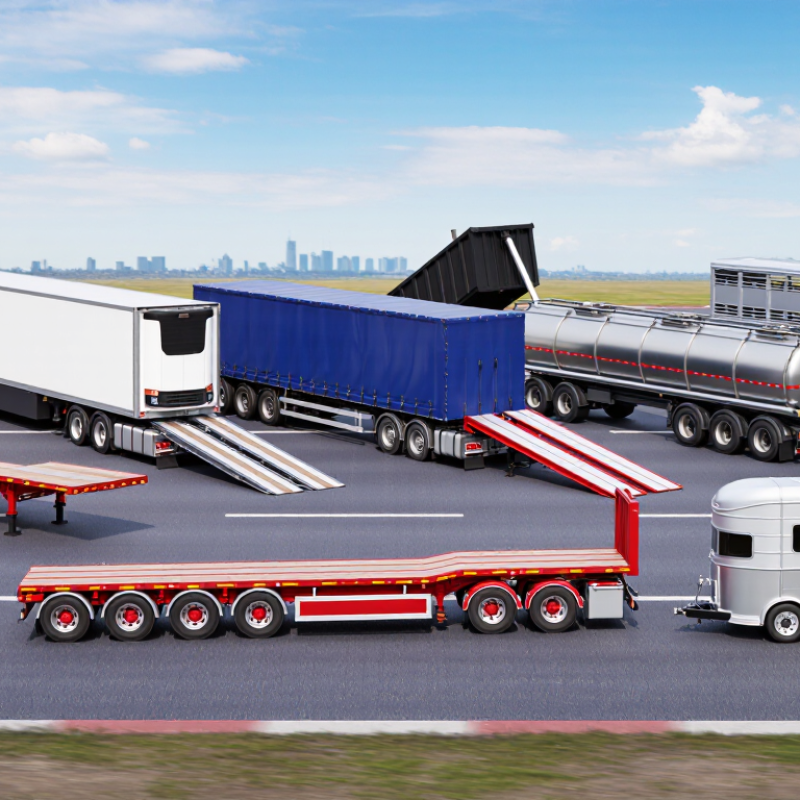
Global buyers can compare ten common trailer types by structure, function, and towing capacity. Flatbed trailers carry machinery, steel, and oversized loads. Box trailers protect cartons from rain and dust. Utility trailers suit tools, garden equipment, and light cargo. Dump trailers release sand or gravel through hydraulic lifting. Lowboy trailers position heavy machinery close to the road surface.

Tanker trailers transport approved liquids inside sealed cylindrical bodies. Livestock trailers use ventilated sides and safer interior spacing. Car haulers include ramps and wheel restraints for vehicle transport. Refrigerated trailers maintain controlled temperatures for perishable goods. Boat trailers use shaped supports, rollers, and corrosion-resistant components. Capacity varies widely. Axles, brakes, frame strength, and tongue weight all affect safe towing.

Tips: Match the trailer’s loaded weight with the tow vehicle’s rated capacity. Measure the cargo, not only the trailer bed. Check brake systems, lighting, tire condition, and coupling height before delivery. Ask for load charts and maintenance records. A practical inspection often reveals more than a brochure. I have seen buyers focus on volume and overlook tongue weight. That mistake can cause unstable handling. Ratings also differ by configuration and region, so confirm the current technical requirements before purchase. A simple comparison is useful, but real cargo conditions deserve another look.

Flatbed Trailers for Versatile Cargo Transport

Flatbed trailers remain a practical choice for global buyers handling varied cargo. Their open deck supports timber, steel sections, construction equipment, and crated machinery. Side walls do not restrict loading from the rear or sides. That flexibility matters. In field operations, I have seen crews load awkward cargo faster with a flatbed than with an enclosed trailer. However, the open design exposes freight to rain, dust, and shifting winds.

Buyers should check deck length, width, payload rating, axle spacing, and suspension design. These details affect stability on long routes. A concentrated load may require stronger flooring or a different axle arrangement. Tie-down points must be easy to reach and properly rated. Use approved straps, chains, edge protectors, and blocking materials. Securement is not an afterthought. Load height also affects clearance, turning safety, and route planning.

For international purchasing, confirm the trailer’s dimensions, braking equipment, lighting, and documentation requirements. Local rules can differ significantly. Ask for inspection records and maintenance history before approving the purchase. Check welds, tires, kingpin areas, landing gear, and deck corrosion. Small defects can become expensive failures. I once underestimated moisture damage beneath a wooden deck, and the repair delayed delivery. That mistake still influences my inspection process. A careful buyer should leave room for replacement parts, training, and unexpected port handling costs. Flatbeds are versatile, but they are not maintenance-free.

Top 10 Trailer Vehicle Types for Global Buyers

Typical payload capacity comparison, highlighting the versatility of flatbed trailers for oversized and general cargo transport.

Payload figures are indicative typical ranges for commonly used commercial configurations. Actual capacity varies by axle count, trailer specifications, road regulations, and cargo requirements.

Enclosed Trailers for Protected Goods and Equipment

Top 10 Trailer Vehicle Types for Global Buyers

Enclosed Trailers for Protected Goods and Equipment

Among the leading trailer types, enclosed trailers create a controlled, lockable space for tools, spare parts, packaged goods, and equipment. They shield cargo from rain, dust, road debris, and direct sunlight. That protection matters during long transfers. One damaged seal can affect an entire shipment. Fortune Business Insights estimated the global trailer market at US$56.91 billion in 2023, with continued growth expected through 2032. Market size shows demand, not suitability. Fit matters more.

A practical specification starts with payload, axle rating, interior height, ramp capacity, and brake compatibility. The Federal Motor Carrier Safety Administration stresses proper cargo securement and weight control in commercial operations. Buyers should inspect tie-down rails, floor joints, door seals, lighting, and corrosion protection. A matched coupler and reliable electrical connection can prevent avoidable roadside problems. Small details matter.

Inside an enclosed trailer, airflow deserves equal attention to weather sealing. Ventilation may reduce condensation around metal equipment, though excessive openings can weaken temperature control. The OECD International Transport Forum’s Transport Outlook 2023 projects global freight activity could nearly double by 2050, increasing pressure for efficient equipment selection. Compare empty weight, insulation, shelving, and service access against actual routes. I have seen a trailer appear spacious until a ramp, toolbox, and spare wheel consume usable length. That assumption can fail. A loading trial often reveals more than a polished brochure.

Refrigerated Trailers for Temperature-Sensitive Cargo

Top 10 Trailer Vehicle Types for Global Buyers

Refrigerated trailers protect temperature-sensitive cargo during long-distance transport. They commonly carry fresh produce, dairy products, frozen foods, flowers, and certain medical supplies. Reliable temperature control begins with selecting the correct operating range. A frozen load needs different settings from fresh vegetables.

Before loading, inspect the cooling unit, door seals, floor, and interior walls. Small gaps can allow warm air inside. Pre-cooling the trailer is essential. The cargo should also be loaded with enough air space around each pallet. Blocked airflow creates uneven temperatures, even when the display appears normal.

Digital temperature records support better decisions and clearer accountability. Sensors should be checked regularly and positioned near vulnerable cargo areas. Drivers need practical training, not just written instructions. Route delays, weather changes, and loading-dock conditions can affect performance. Plans can fail.

In real operations, mistakes still happen. A door may remain open too long, or a sensor may be placed poorly. Reviewing these incidents improves future handling. Buyers should compare insulation quality, payload capacity, service access, and energy use. A refrigerated trailer must fit the cargo, route, climate, and maintenance resources. There is no universal setup.

Top 10 Trailer Vehicle Types for Global Buyers - Refrigerated Trailers for Temperature-Sensitive Cargo

Typical specifications and applications for common refrigerated trailer configurations

Rank Trailer Vehicle Type Typical Body Length Approx. Internal Volume Typical Payload Capacity Common Temperature Range Typical Axle Configuration Best-Suited Cargo and Operating Environment
1 Standard Single-Temperature Reefer Trailer 13.6–16.2 m
(44.6–53.1 ft)
80–100 m³
(2,825–3,530 ft³)
20–28 t
(44,100–61,700 lb)
Approximately −25°C to +20°C
(−13°F to +68°F)
2 or 3 axles General chilled or frozen food distribution, regional transport, and long-haul road freight.
2 Multi-Temperature Compartment Reefer 13.6–16.2 m
(44.6–53.1 ft)
75–95 m³
(2,650–3,355 ft³)
18–27 t
(39,700–59,500 lb)
Typically −25°C to +10°C
(−13°F to +50°F)
2 or 3 axles Mixed loads such as frozen food, chilled dairy, fresh produce, and prepared meals on one route.
3 Frozen-Food Reefer Trailer 13.6–16.2 m
(44.6–53.1 ft)
80–100 m³
(2,825–3,530 ft³)
20–28 t
(44,100–61,700 lb)
Approximately −25°C to −18°C
(−13°F to 0°F)
2 or 3 axles Frozen meat, seafood, ice cream, frozen vegetables, and other products requiring continuous low temperatures.
4 Fresh-Produce Reefer Trailer 13.6–16.2 m
(44.6–53.1 ft)
80–100 m³
(2,825–3,530 ft³)
20–28 t
(44,100–61,700 lb)
Approximately 0°C to +10°C
(32°F to 50°F)
2 or 3 axles Fruit, vegetables, flowers, and other fresh products that need airflow and controlled temperature rather than freezing.
5 Pharmaceutical and Healthcare Reefer Trailer 13.6–16.2 m
(44.6–53.1 ft)
75–95 m³
(2,650–3,355 ft³)
18–27 t
(39,700–59,500 lb)
Commonly +2°C to +8°C
(36°F to 46°F)
2 or 3 axles Temperature-sensitive medicines, vaccines, biologics, laboratory materials, and healthcare products requiring monitoring and validated procedures.
6 Urban Distribution Reefer Trailer 8–13.6 m
(26.2–44.6 ft)
35–80 m³
(1,236–2,825 ft³)
8–20 t
(17,600–44,100 lb)
Approximately −20°C to +10°C
(−4°F to +50°F)
1 or 2 axles Supermarket deliveries, foodservice routes, city depots, and operations requiring frequent stops and dock access.
7 Lightweight High-Volume Reefer Trailer 13.6–16.2 m
(44.6–53.1 ft)
85–105 m³
(3,002–3,708 ft³)
18–25 t
(39,700–55,100 lb)
Approximately −25°C to +15°C
(−13°F to +59°F)
2 or 3 axles High-volume, relatively lightweight products where internal cubic capacity is more important than maximum payload.
8 Insulated Reefer Trailer with Side Doors 10–16.2 m
(32.8–53.1 ft)
55–100 m³
(1,943–3,530 ft³)
15–28 t
(33,100–61,700 lb)
Approximately −25°C to +15°C
(−13°F to +59°F)
1, 2, or 3 axles Multi-point loading, catering supply, event logistics, and distribution centers without exclusive rear-dock access.
9 Reefer Container Chassis Combination Container-based: 12.2 or 13.7 m
(40 or 45 ft)
Approximately 67–86 m³
(2,366–3,037 ft³)
Typically 26–30 t
(57,300–66,100 lb)
Commonly −30°C to +30°C
(−22°F to +86°F)
2 or 3 axles Intermodal transport linking ocean terminals, rail services, distribution centers, and inland road networks.
10 Double-Deck Reefer Trailer 13.6–16.2 m
(44.6–53.1 ft)
90–120 m³
(3,178–4,238 ft³)
18–26 t
(39,700–57,300 lb)
Approximately −25°C to +10°C
(−13°F to +50°F)
2 or 3 axles Packaged food, dairy, and other cube-intensive cargo where additional loading levels improve volume utilization.

Data note: Specifications are typical industry ranges and can vary according to local regulations, body construction, insulation thickness, refrigeration equipment, axle limits, interior fittings, and cargo-loading requirements. Payload figures refer to approximate usable cargo capacity and should be verified against the legal gross vehicle weight in the destination market.

Specialized Trailers for Construction, Agriculture, and Heavy Hauling

Global buyers often choose trailers by load class, terrain, and loading frequency. Construction fleets may need dump trailers, lowboys, extendable flatbeds, and equipment trailers. Dump bodies handle soil and aggregate on rough sites. Lowboys keep excavators stable with a low deck. Extendable flatbeds support long steel, beams, and modular structures. Equipment trailers suit compact loaders and generators, but ramp angles deserve careful inspection. A small mismatch can create expensive delays.

Agricultural operators commonly compare grain trailers, livestock trailers, bale trailers, and hydraulic tipping units. Ventilation, washable floors, axle spacing, and corrosion protection matter in daily use.

Heavy-haul buyers should examine multi-axle platform trailers, self-steering options, and hydraulic suspension. These designs improve maneuverability around tight yards and uneven access roads. However, more axles mean more maintenance points. That trade-off is easy to underestimate.

Tips: Match the trailer to the real payload, not the best-case brochure figure. Verify deck height, ramp capacity, kingpin dimensions, and brake compatibility. Ask for service records and inspect welds around hinges, couplers, and suspension mounts. Confirm lighting and safety equipment meet the destination’s rules. A useful field test is simple: load the machine, turn sharply, and check clearance. Perfect specifications do not replace practical testing. Buyers may focus on price, then regret weak corrosion protection after one wet season.

FAQS

What are the main trailer types covered in the article?

Common types include flatbed, box, utility, dump, lowboy, tanker, livestock, car hauler, refrigerated, and boat trailers.

What is an enclosed trailer best suited for?

It protects tools, spare parts, packaged goods, and equipment from rain, dust, debris, and sunlight. Fit matters more.

Which specifications should buyers compare?

Compare payload, axle rating, interior height, ramp capacity, brake compatibility, insulation, shelving, and service access.

How can buyers check whether a trailer matches their tow vehicle?

Match the loaded trailer weight with the vehicle’s rated capacity. Include cargo weight, tongue weight, and trailer weight.

Why does tongue weight matter?

Incorrect tongue weight can cause unstable handling. Volume alone does not prove safe towing.

What should buyers inspect before delivery?

Check brakes, lights, tires, coupling height, tie-down rails, floor joints, door seals, and corrosion protection.

How can enclosed trailers manage moisture and airflow?

Ventilation may reduce condensation around metal equipment. However, large openings can weaken temperature control.

Why is a loading trial useful?

It reveals practical space limits. A ramp, toolbox, and spare wheel may consume usable length.

What features suit specialized cargo?

Dump trailers use hydraulic lifting. Lowboys carry tall machinery. Tankers use sealed bodies, while boat trailers use shaped supports.

Are published ratings always enough for choosing a trailer?

No. Ratings vary by configuration and region. Confirm current requirements and review maintenance records before purchase.

Conclusion

This guide explores the top 10 Trailer Vehicle types for global buyers by comparing their structure, function, load capacity, and towing requirements. It explains how different trailer designs support various transportation needs, from general freight and machinery to specialized cargo. Understanding factors such as deck layout, enclosed space, axle configuration, payload limits, and towing compatibility can help buyers select a trailer that matches their vehicle, route conditions, and operating goals.

The article highlights flatbed trailers for flexible transport of oversized or irregularly shaped goods, enclosed trailers for protecting equipment and cargo from weather or damage, and refrigerated trailers for maintaining controlled temperatures during the movement of perishable products. It also introduces specialized trailers used in construction, agriculture, and heavy hauling, where durability, stability, and customized loading systems are especially important. Together, these categories provide a practical framework for evaluating trailer solutions for different industries and shipping conditions.

Isabella

Isabella

Isabella is a dedicated marketing professional with a sharp focus on driving brand growth and engagement through strategic content creation. With an extensive background in digital marketing, she combines her passion for storytelling with her keen understanding of industry trends to deliver......